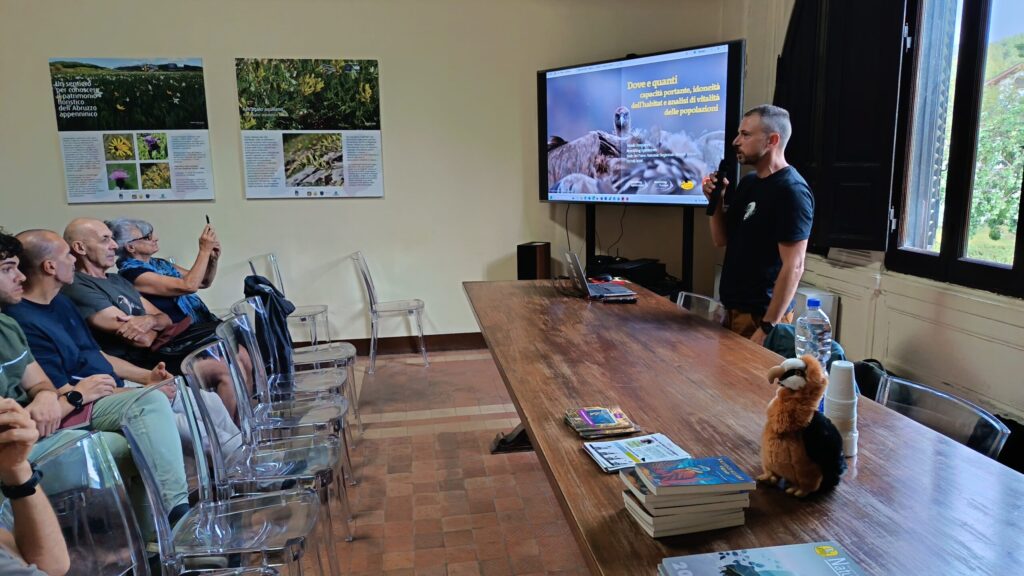

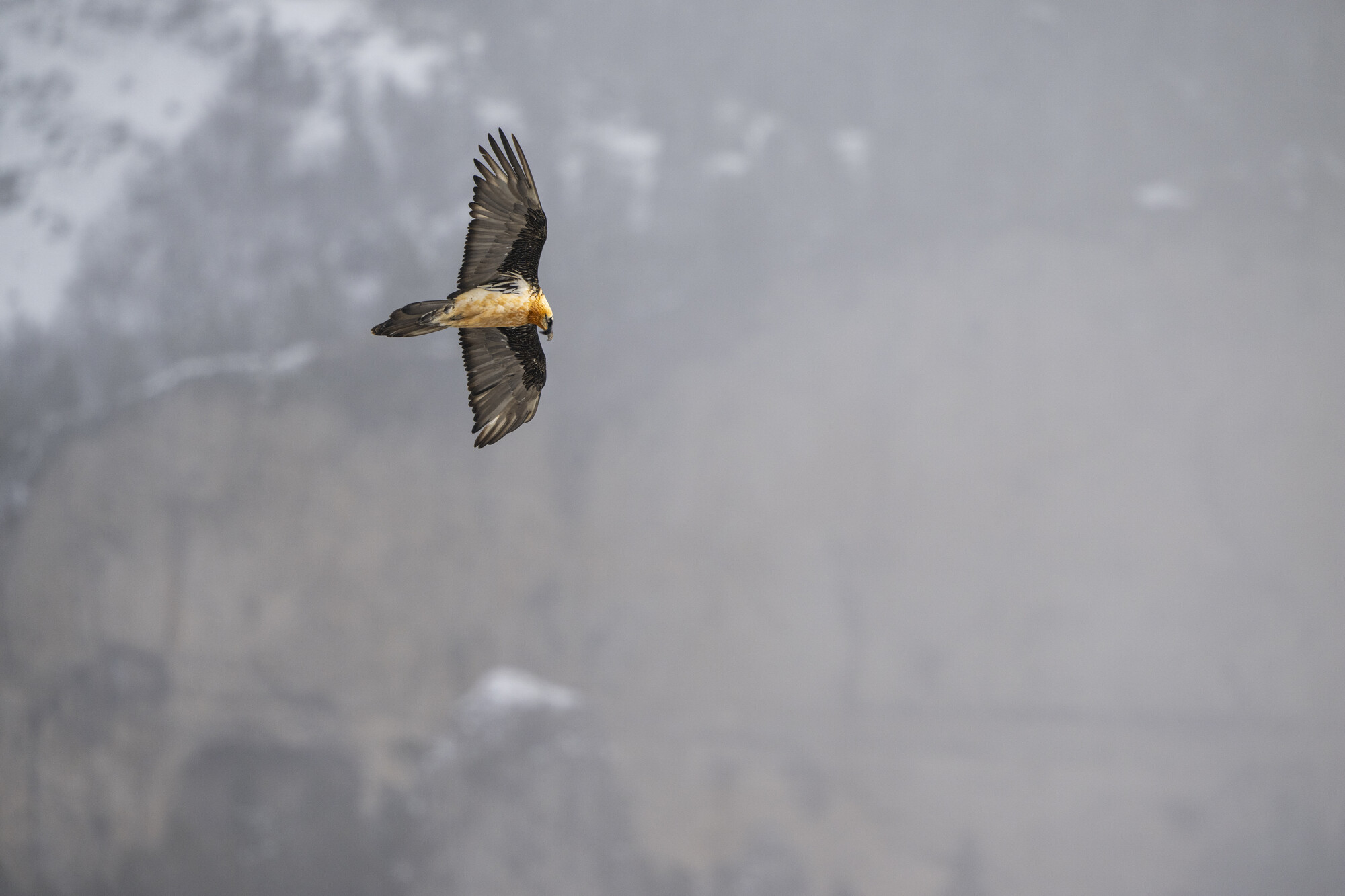
On 7 August, at the headquarters of the Sirente Velino Regional Nature Park in Rocca di Mezzo, Rewilding Apennines presented the study assessing whether the environmental and social conditions now exist to bring the bearded vulture and the cinereous vulture back to the Central Apennines. Almost two years of work, sixteen authors from six European countries, three hundred and fifty pages.
.
Some forty people filled the room: technical staff, representatives of public bodies and NGOs, and enthusiasts. On the table, a three-hundred-and-fifty-page volume attempting to answer a question that is simple to formulate and complicated to verify: can the bearded vulture and the cinereous vulture return to the Apennines?
Why a study, and why now
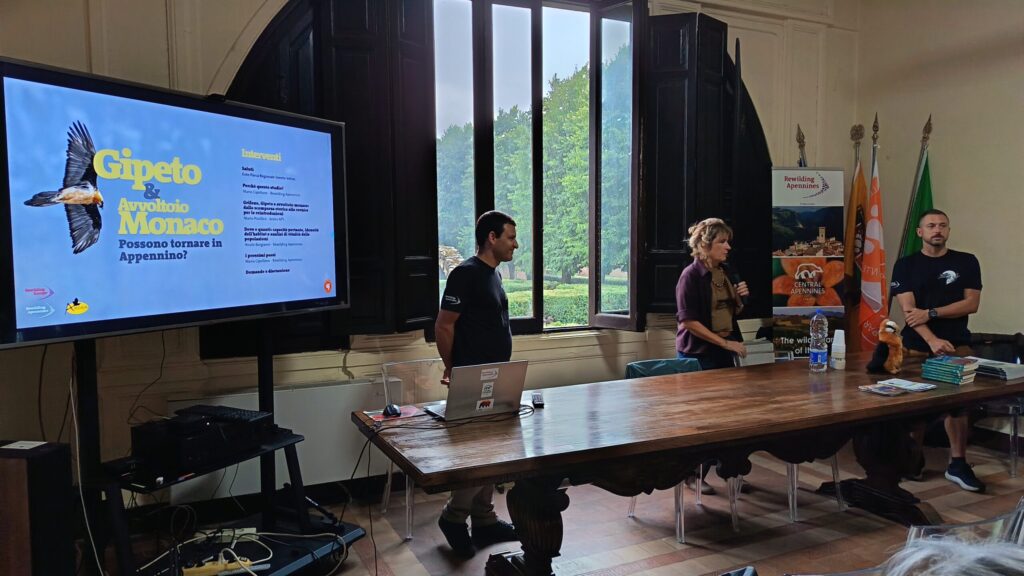
Opening proceedings, after a welcome from Paola Morini, biologist at the Sirente Velino Regional Nature Park, Mario Cipollone of Rewilding Apennines explained where this work comes from.
Since its foundation, Rewilding Apennines has worked alongside Rewilding Europe on the return of key species and the rebuilding of complete food webs: an ecosystem missing components functions less well, and in the Apennines the large scavengers are among the missing pieces.
Vultures dispose of carcasses faster than any other animal: their digestive system, with extremely corrosive gastric acids, neutralises pathogens such as those causing anthrax, cholera and botulism. By removing dead animals quickly they reduce the risk of bacterial and viral outbreaks spreading among wildlife, livestock and people, and they return nutrients to the soil.
Reintroductions, however, are not carried out on enthusiasm. International standards require that, before any release, it be verified with data whether the environment can sustain the species, whether the causes of its disappearance have been removed, and whether the people living in that territory are willing to coexist with it. A feasibility study serves precisely this purpose: setting down in writing what we know.
.
From historical disappearance to a shared framework
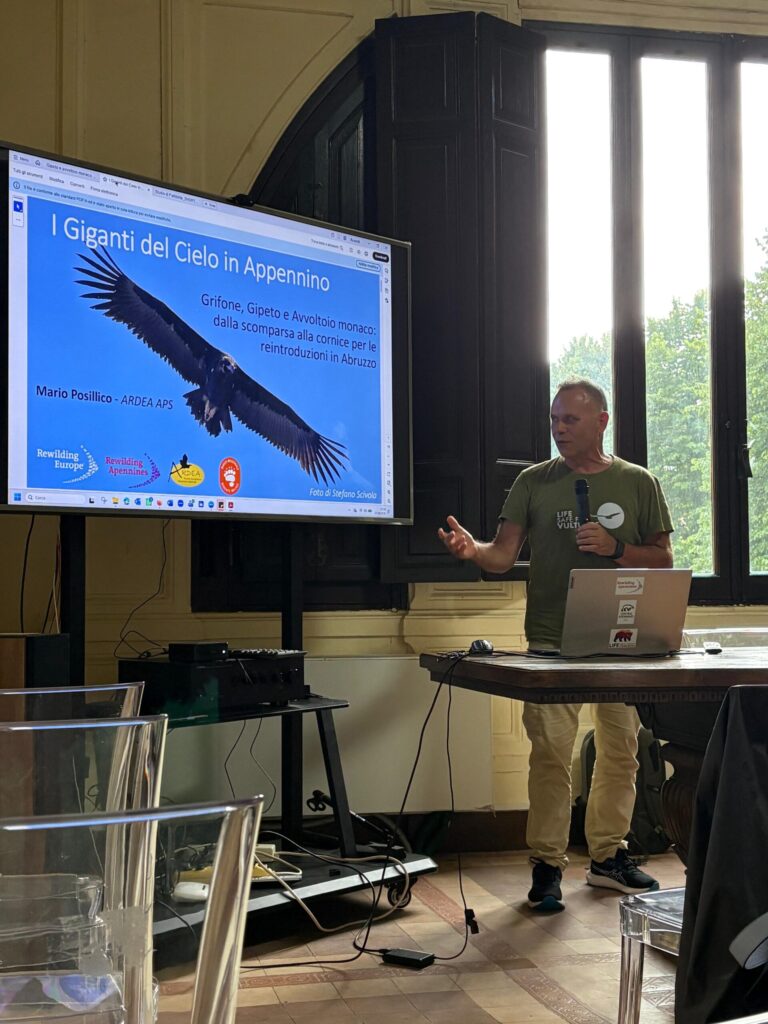
Mario Posillico, of Ardea APS, retraced the history of the three large vultures of the Apennines: griffon vulture, bearded vulture and cinereous vulture. All three disappeared through direct persecution and poison, in a context that was meanwhile changing around them: the thinning out of large wild herbivores and the transformation of livestock practices progressively reduced the availability of carcasses, the only food resource these birds live on. The study reconstructs every historical stage, drawing on the available sources documenting the ecological, landscape and sociocultural changes behind this gradual disappearance. The griffon vulture is the only one to have returned, thanks to releases begun in the 1990s, and today it offers the most useful benchmark for understanding what might work, and what might not, for the other two species.
.
Where and how many
The most technical section fell to Nicolò Borgianni, vulture expert at Rewilding Apennines, who presented the analyses of habitat suitability, carrying capacity and population viability. In practice: which slopes and which rock faces offer suitable conditions for nesting and feeding, how many individuals the territory could support, and how a population founded from scratch would behave over decades, simulating different scenarios of mortality and release. These are models, with the margins of uncertainty models carry with them, but they serve to shift the discussion from opinions to numbers.
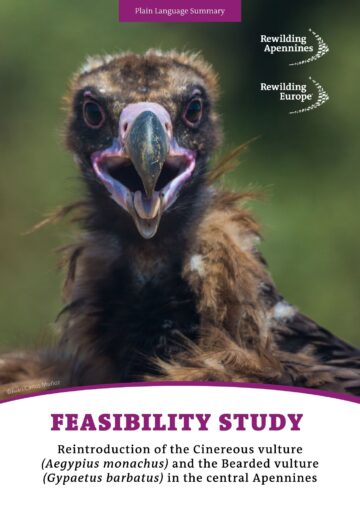
Download the plain language summary and the full study
.
Next steps
In his closing remarks Mario Cipollone recalled that moving from a feasibility study to the reintroduction of scavenging birds requires time, patience and perseverance, teamwork and adequate resources. After answering numerous questions from the audience, the team leader of Rewilding Apennines closed the meeting as follows:
«Seeing extraordinary birds such as cinereous vultures and bearded vultures wheeling over the skies of the Apennines is a dream we have held for a long time, and I believe we are moving, step by step, with great commitment and sacrifice, in the right direction to make it happen, following a long-term strategic vision.»