
From Darwin to bowerbirds, from Tokyo pigeons to macaques: for over a century, science has been trying to understand whether animals have a sense of beauty. The answers are more nuanced than they appear, and end up saying something about us too.
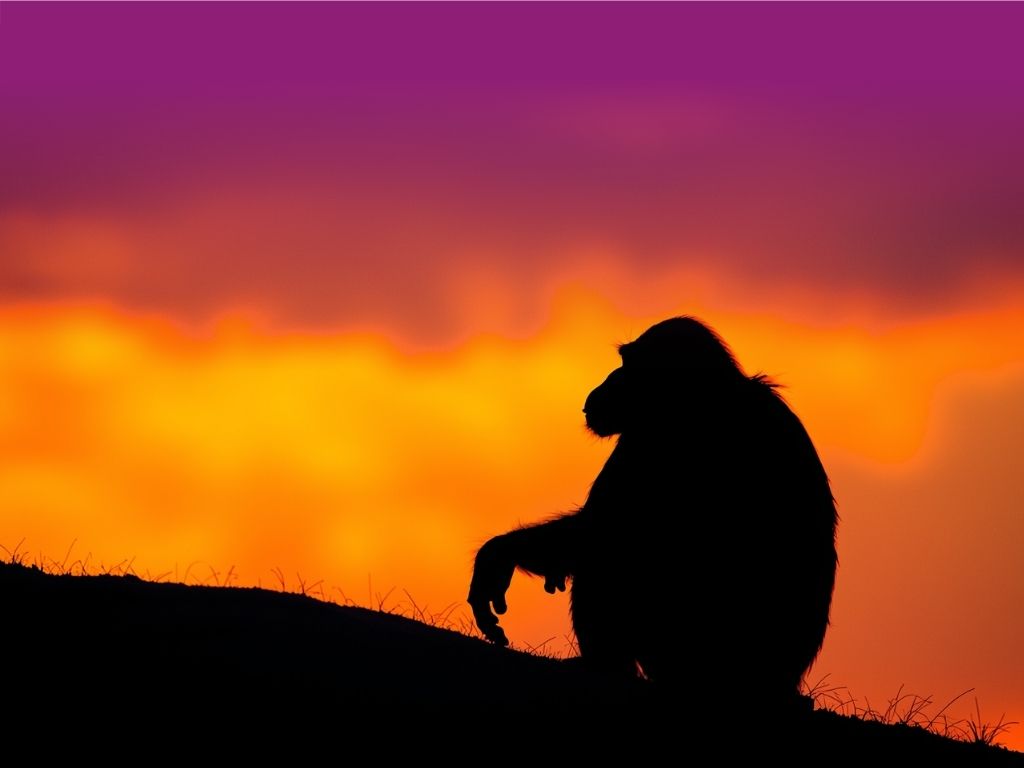
Frans de Waal witnessed it more than once. An adult chimpanzee detaches from the group, stands upright, and stays there. Watching the sun go down. In silence, for minutes. When the Dutch primatologist recounted the episode in public, someone asked whether he wasn’t simply projecting his own human experience. His answer, careful but firm, was this: we cannot know what the animal is feeling, but pretending it feels nothing is another form of projection.
This was what he called anthropodenial: the systematic refusal to acknowledge similarities between ourselves and other species. An error that de Waal considered the mirror image of anthropomorphism, and no less serious.
.
Darwin and the idea that was buried
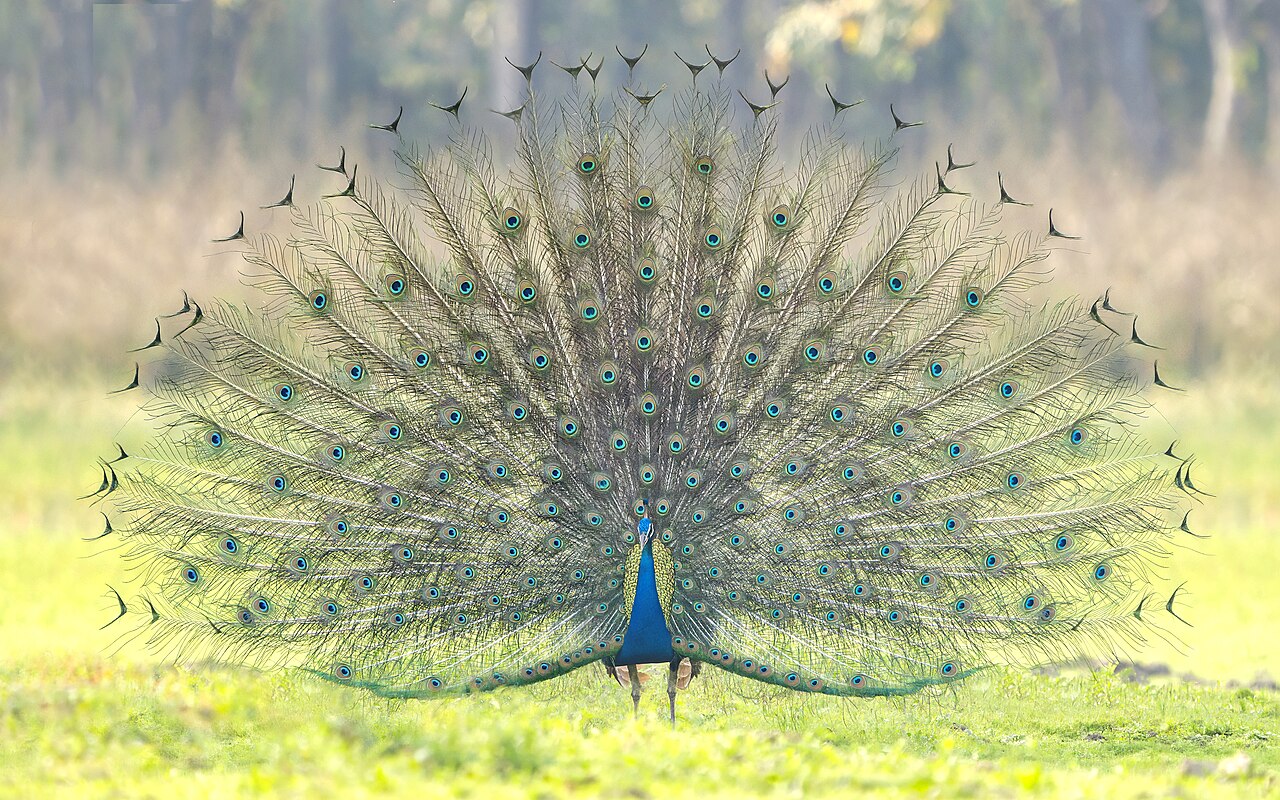
The question of whether animals have a sense of beauty is less marginal than it might seem. Charles Darwin posed it explicitly in The Descent of Man (1871), arguing that sexual selection operated not only through indicators of genetic quality, but through genuine aesthetic preference. Females of many species chose males for qualities he called beauty for beauty’s sake. Consider the peacock’s tail: an outsized ornament, costly to carry, conspicuous to predators. From the standpoint of pure survival, a disaster. And yet it exists, and according to Darwin it exists because females find it attractive.
The idea was swiftly buried by the neo-Darwinian synthesis of the twentieth century, which dismissed it as sentimental and anthropomorphic.

In the 1930s, Ronald Fisher attempted to give Darwin’s idea a genetic and mathematical foundation with his model of runaway selection. The logic runs as follows: if, for some reason, a female preference for a “costly” trait becomes established in a population, offspring that inherit both the trait and the preference multiply across successive generations. Trait and preference reinforce one another, each pushing the other to excess.
The peacock, in Fisher’s account, does not have such a tail because it signals health or genetic quality: it has it because peahens, once the dynamic was set in motion, just kept liking it more and more.
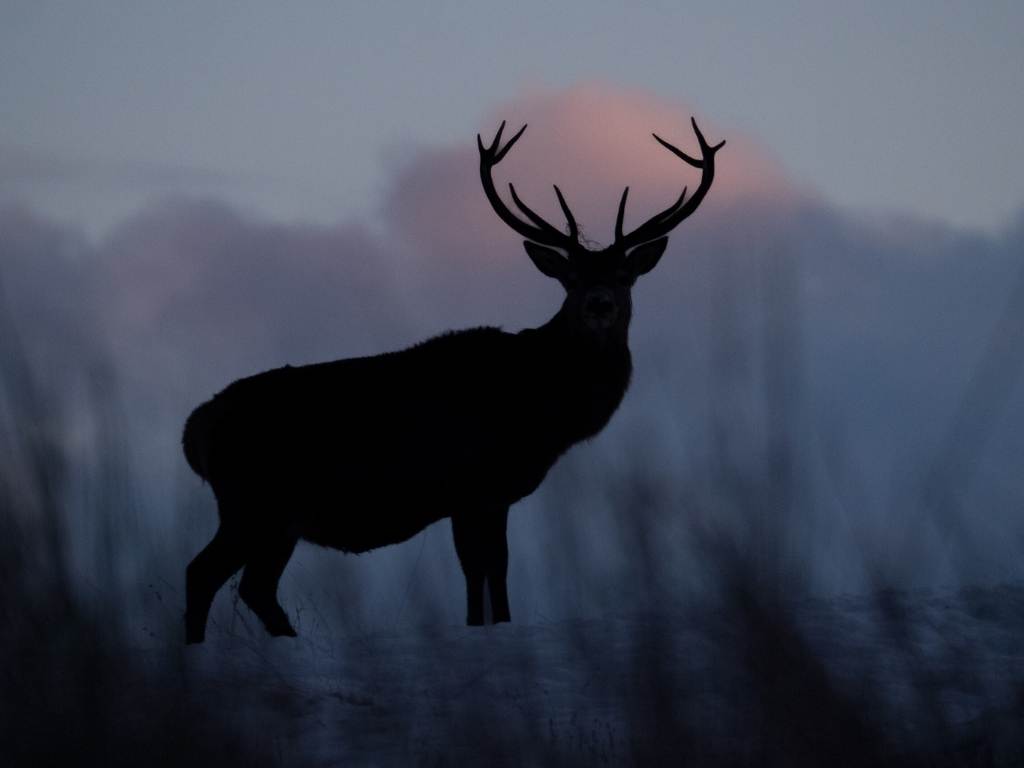
Yet as the neo-Darwinian synthesis consolidated, the intellectual climate became increasingly adaptationist: every trait had to have a function, even the most costly. Fisher’s model was deemed mathematically elegant but biologically implausible. To account for these unwieldy ornaments, Amotz Zahavi proposed the handicap principle in 1975: costly ornaments are honest signals of genetic quality precisely because only healthy individuals can afford to carry them without paying with their lives. A stag’s antlers, for instance, are heavy and metabolically expensive to regenerate each year; only a healthy male can bear that cost. The explanation was welcomed as the scientifically rigorous version of sexual selection theory, and Darwin’s original idea about aesthetics was definitively filed away as naivety.
At that point, Darwin’s beauty for beauty’s sake was no longer needed. The peacock’s tail had its functional justification.
The evolution of beauty: a question resurfaces
It was Richard Prum, an ornithologist at Yale, who brought it back to life in the 2000s. In The Evolution of Beauty (2017), Prum argues that the coevolution of ornament and preference can proceed autonomously, generating beauty that reflects nothing beyond itself, disconnected from any indicator: the peacock’s tail exists because females prefer it, not because it signals health, vigour, or genetic quality. The preference is the cause, not the symptom.
A controversial and contested position, but a scientifically defensible one, which reopens space for a question that reductionism may have closed too hastily.
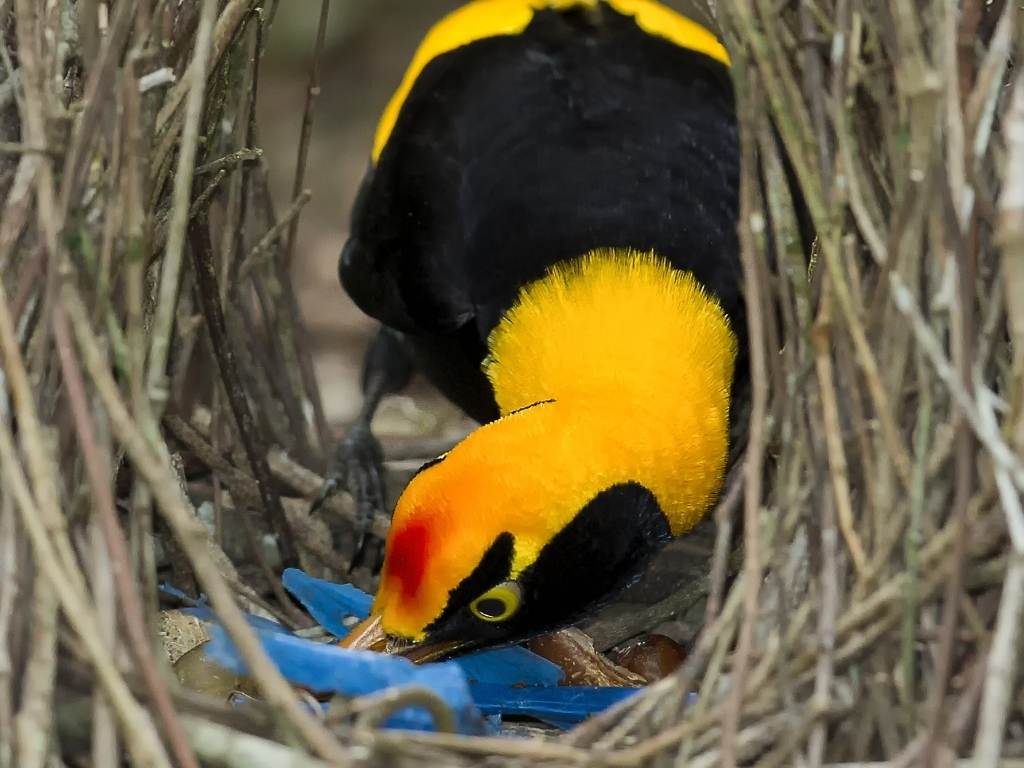
The clearest case studies come from Australian bowerbirds. Males do not merely display plumage or song. They build bowers: complex architectural structures of woven twigs, decorated with carefully arranged found objects, blue berries, shells, flowers, coloured plastic. Females inspect the bowers one by one, assessing symmetry, colour, and assembly, then make their choice.
Gerald Borgia, a biologist at the University of Maryland, demonstrated over decades of research on the satin bowerbird (Ptilonorhynchus violaceus) that minor changes in the visual composition of a bower, a shift of a few centimetres, a slightly darker berry among the blue ones, cause a male’s reproductive success to collapse. This is not a vague preference. It is a repeatable, statistically significant aesthetic judgement, shared among individuals of the same species.
More recently, John Endler and colleagues (Current Biology, 2010) found that the great bowerbird (Chlamydera nuchalis) arranges objects according to a principle of forced perspective: larger stones placed further from the female’s viewing point, creating an illusion of geometric uniformity. A complex optical architecture built by a brain weighing a few grams.
Pigeons and Impressionists
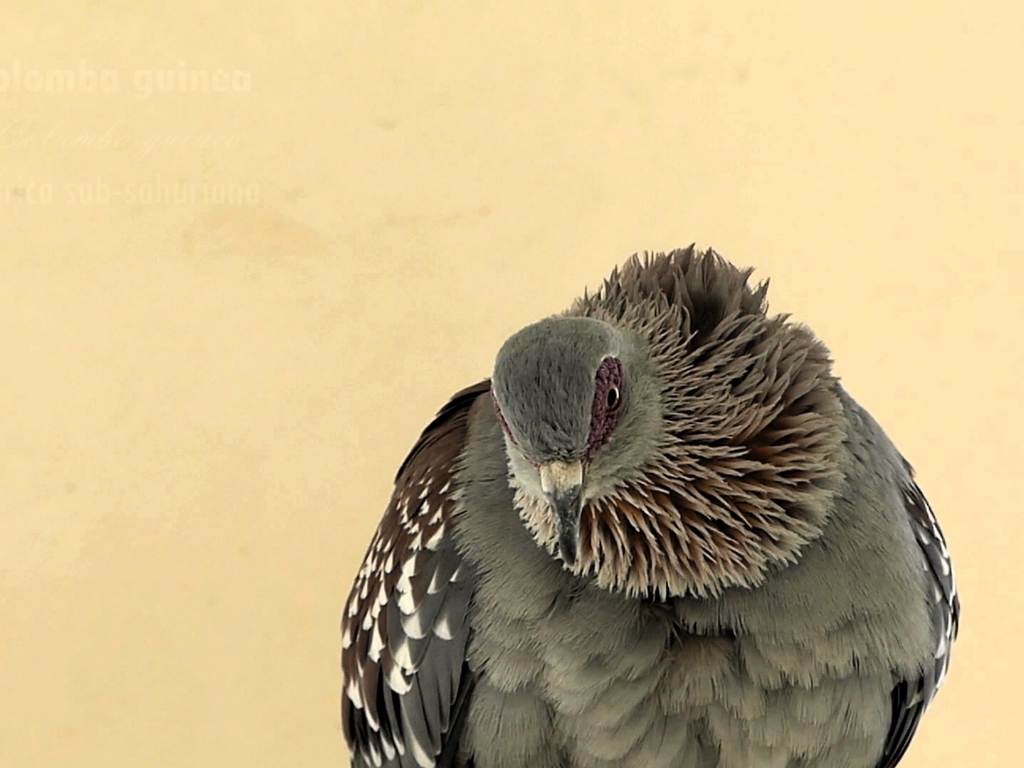
On the experimental side, the key reference is the work of Shigeru Watanabe at Keio University in Tokyo. In 1995, in the Journal of the Experimental Analysis of Behavior, Watanabe published what has since become a classic experiment. He trained one group of pigeons to peck a screen only when shown a Monet, and another group to peck only when shown a Picasso. After training, they were shown works they had never seen, by other Impressionists and other Cubists. The pigeons responded correctly. They had not memorised individual images: they had learnt a style as an abstract category.
Earlier experiments had already shown that pigeons can distinguish Bach from Stravinsky. Later studies from Watanabe’s group extended the approach to aesthetics (Watanabe, 2010), testing whether pigeons could discriminate between paintings judged by humans as “well-made” or “less well-made.” One group was rewarded for pecking at a “well-made” painting, another for pecking at a “less well-made” one. When subsequently tested on new paintings, never previously seen, and also rated by humans, the pigeons continued to “judge” them in the same way as the humans had, despite having received no reward for viewing them.
Macaques and corvids, too, respond consistently to the same perceptual rules that shape our own aesthetic experience: symmetry, balance, contrast. Neuroimaging research suggests that at least some of the cortical areas activated when we look at a painting or a face are the same ones that activate in them. Aesthetic judgement, in its most basic components, appears to have a neural basis older than our species.
Had Watanabe’s pigeons, then, learnt beauty?
Where the problem becomes philosophical
The phrase sense of beauty can mean two very different things.
The first is straightforward: a stable visual or auditory preference that recurs consistently across individuals of the same species. At this level the experimental answer is clearly affirmative, and the examples considered here, from bowerbirds to pigeons to macaques, confirm it.
But there is a second level, what Kant called disinterested pleasure: looking at something beautiful without wanting to possess it, without it serving any purpose. The chimpanzee standing before the sunset, assuming it really does stop for that reason, is it watching simply for the sake of watching?
At this level science is less well equipped. We enter the territory of animal consciousness, where data are scarce and ideological positions unhelpful. In his later books, Frans de Waal argued that the distinction between adaptive preference and disinterested contemplation is not a sharp boundary but a gradual transition, much like his matryoshka model of empathy: a scale that runs from simple emotional contagion all the way to the capacity to place oneself in another’s position, which, at least for now, is thought to be uniquely human.
Back to the chimpanzee
De Waal and Jane Goodall documented episodes similar to the opening sunset scene: prolonged pauses before landscapes, silent stillnesses. Goodall wrote at length about what she called waterfall dances, chimpanzees arriving at a waterfall and beginning to sway rhythmically, throwing stones into the water, watching it flow. These are not utilitarian behaviours, and they are not explained by any immediate need.
To infer an aesthetic experience is reasonable. To describe it from the inside is impossible.
The philosopher Vinciane Despret, in her essay What Would Animals Say If We Asked the Right Questions?, turns the question entirely around. Do not ask whether animals have a sense of beauty, she suggests. Ask what it reveals about us that we keep asking. For over a century we have been trying to determine whether animals are similar enough to us to deserve our consideration. The question may be poorly framed. Perhaps the point is not how much animals resemble us, but how willing we are to acknowledge that their experience of the world, whatever it may be, exists independently of us.
Today is the International Day for Biological Diversity.
It is usually marked for what it offers us.
Perhaps, for once, it is worth marking it for what it is.