
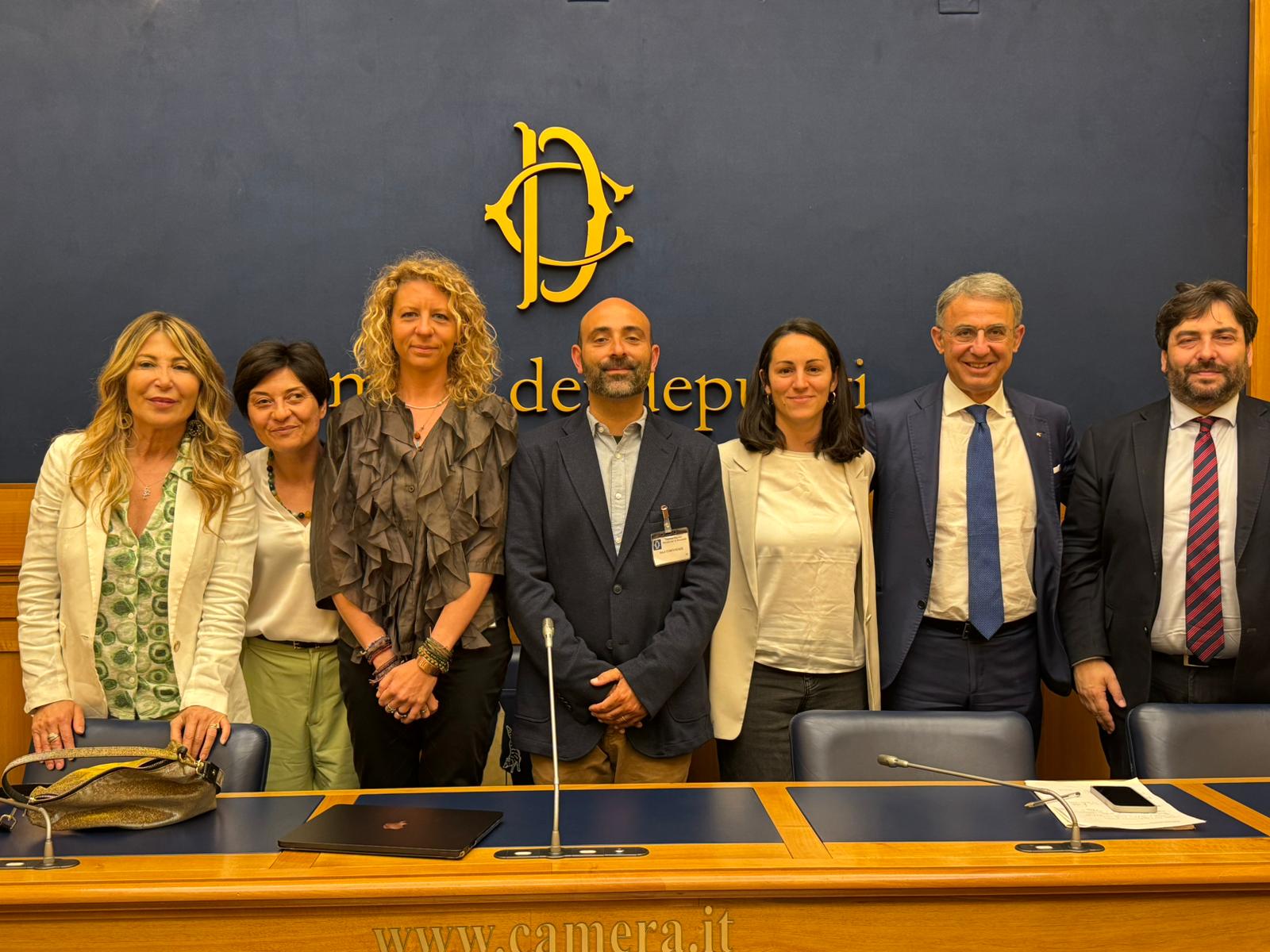
The recent poisoning incidents that occurred between April and May in the Central Apennines, causing the death of at least 21 wolves and other wild animals inside and outside the Abruzzo, Lazio and Molise National Park, were at the centre of the meeting held today in the Press Room of the Chamber of Deputies, on the initiative of MP Eleonora Evi with the support of the associations Io non ho paura del Lupo, Salviamo l’Orso and Rewilding Apennines ETS, dedicated to the phenomenon of poisoned baits and its environmental, health and social consequences. A discussion between associations, researchers and institutions to denounce the growing severity of this phenomenon and to call for a change of pace in tackling crimes against wildlife.
During the event, it was recalled how poisoning incidents now represent a structural and widespread phenomenon across the country. According to data from the National Portal for the Monitoring of Intentional Poisonings, between 2009 and 2024 in Italy 16,826 poisoned animals were recorded: nearly three a day, every day, for fifteen years. Figures which, according to the speakers, represent only a part of the real phenomenon, often hidden and difficult to prosecute.
“As far as the wolf is concerned, between 2019 and 2023 at least 1,639 individuals were found dead in Italy, with a constantly increasing trend: from 210 cases recorded in 2019 to 449 in 2023. We are talking about more than one wolf dead per day, and this is certainly an underestimate of the actual mortality of the species,” declared Francesco Romito of Io non ho paura del Lupo APS during the meeting, adding that “the causes of mortality directly or indirectly attributable to humans account for over 70% of documented cases”.
A picture that highlights profound inconsistencies in the management of a species which the Government has chosen to downgrade in regulatory terms, despite the strong concerns expressed by a significant part of the scientific community. These data show that the central issue does not concern a hypothetical emergency linked to the wolf, but the capacity of institutions to address concrete problems of legality, land management, prevention and effective implementation of public policies.
During the event, the need emerged forcefully to address the phenomenon of illegal killings no longer as a series of isolated episodes, but as a structured form of environmental crime spread across the country.
“When we talk about poison, we are not only talking about wildlife protection. We are talking about legality. About an environmental crime that has numbers, dynamics and a distribution typical of a systemic phenomenon,” stated Daniela Gentile of Rewilding Apennines ETS in her speech.
Rewilding Apennines, an organisation affiliated with Rewilding Europe and active in ecosystem restoration and coexistence with large carnivores in the Central Apennines, brought to attention data collected in the field together with the Carabinieri Forestali and the Reparto Carabinieri Biodiversità of Castel di Sangro. “We work between Lazio and Abruzzo, respectively the second and fourth regions in Italy for confirmed cases. Abruzzo alone has a poisoning rate per inhabitant four times higher than the national average. The problem, in these mountains, is not marginal. It is structural,” explained Gentile.
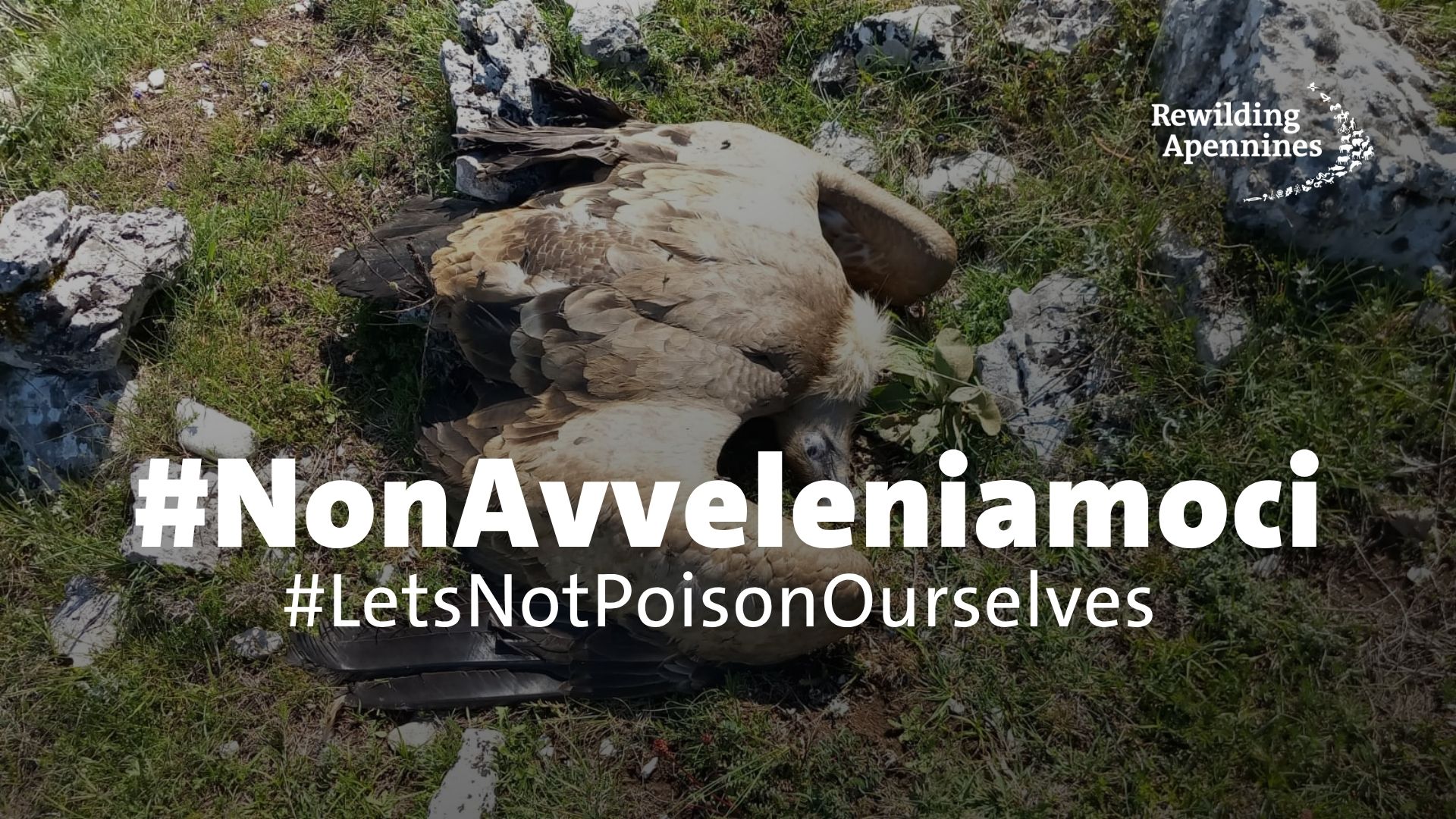
Particularly alarming is the figure regarding griffon vultures: “53% of the griffon vultures we find dead have been poisoned. Including suspected cases, we reach 69%. The griffon vulture is not the target: it feeds on poisoned carcasses, often intended for wolves, and dies.”
Valeria Barbi, environmental journalist and head of communications for Salviamo l’Orso ODV, also spoke at the event. The association has been working since 2012 on the protection and conservation of the Marsican brown bear, a subspecies unique in the world, present exclusively in the Central Apennines and today classified as critically endangered. “When a Marsican bear dies, we do not only lose an individual. We lose genetic diversity, reproductive capacity, ecological resilience. We lose a piece of the world’s natural heritage. The protection of this species, and of biodiversity, cannot become ground for ideological conflict or electoral propaganda. Science speaks clearly. The data exist. The responsibilities are known. What too often is missing is the political will to act with timeliness and consistency,” Barbi clarified. During her speech, she underlined how the persecution of large carnivores represents a risk to the entire ecological balance of the Apennines:
“The international scientific community considers poison one of the most destructive and indiscriminate forms of wildlife persecution. Those who scatter poisoned baits do not hit only one animal. They commit an attack against public heritage, against biodiversity, against environmental health and even against the health security of human communities […] Yet coexistence with large carnivores is possible through prevention tools that are already available. What is missing is a coherent and continuous national strategy.”
From this came the conviction, shared by all speakers, that the recent episode of April 2026, which struck the heart of the Central Apennines, cannot be interpreted as an isolated or marginal fact, but rather represents an extremely serious signal directed at one of the symbolic territories of biodiversity conservation and the protection of large carnivores in Italy. An episode whose value goes beyond the single local event, because it strikes a system of environmental protection built over decades through scientific research, monitoring, prevention, fieldwork and dialogue with local communities.
The associations that took part also pointed out that the victims of poison are not only protected wildlife, but also thousands of domestic dogs and cats, in addition to the potential risk to public health. The substances used often include pesticides and plant protection products banned in Europe for years, but still available on the illegal market.
“Carbofuran has been banned in Europe since 2008. Yet today, eighteen years later, it is still the substance most frequently found in griffon vulture carcasses in the Apennines. Poisoned baits speak of a hidden supply chain that continues to fuel this phenomenon,” added Gentile.
Among the proposals put forward during the event, and shared by the speakers:
- the strengthening of investigative activities and anti-poison units;
- the introduction of specific legislation against the intentional poisoning of wildlife;
- national awareness campaigns; support for local communities investing in coexistence with wildlife;
- a coordinated national strategy modelled on the one already adopted in Spain.
The need was also recalled to effectively implement European Directive 2024/1203 on the protection of the environment through criminal law, including the fight against poison among the priorities of the future national strategy against environmental crimes.
The meeting concluded with a shared appeal to institutions, calling for the fight against the intentional poisoning of wildlife to become a national political priority.
Romito recalled the need to address the issue of wolf management starting from concrete data and a full understanding of the critical issues still affecting the species: “Given the reduction in the level of protection of the wolf, it is essential to have a thorough understanding of the real threats that this species continues to face in our country. Poisonings and the lack of updated monitoring describe a situation far more complex than the simplistic narrative of a numerical emergency.”
“Full institutional unity is needed. It is no longer acceptable to witness contradictory messages coming from different levels of public administration,” Barbi concluded.
Gentile shared the same view, underlining that “When a crime has this scale, this systematic nature, this diffusion, and produces zero convictions, it is no longer just a matter of investigative difficulty. It is a political choice.”
Video recording of the press conference
For information:
Francesco Romito, Vice President and Head of Communications, Io non ho paura del lupo APS francesco.romito@iononhopauradellupo.it
Valeria Barbi, Head of Communications, Salviamo L’Orso comunicazione@salviamolorso.it
Daniela Gentile, Communications, Rewilding Apennines info@rewilding-apennines.com