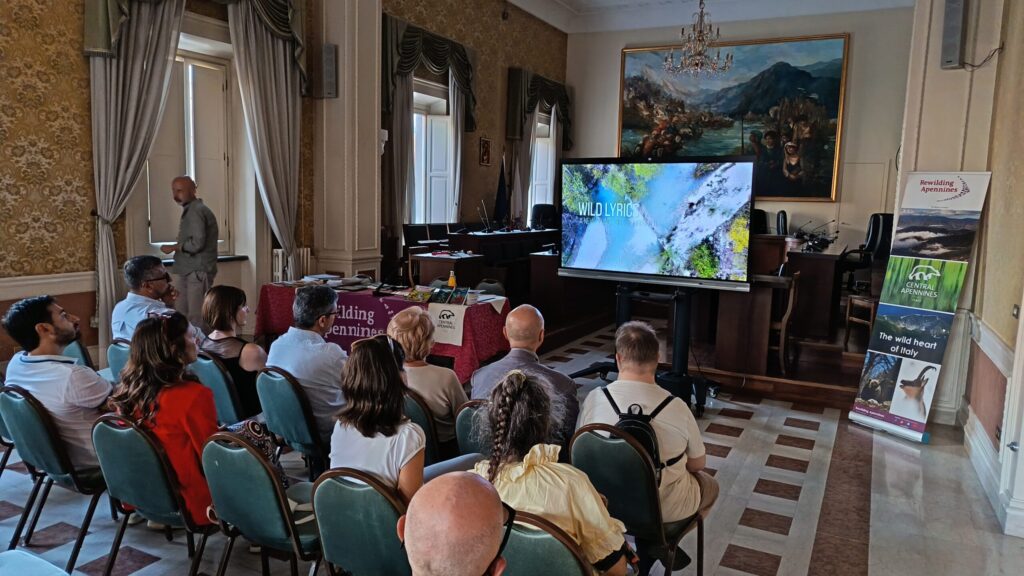

Last summer, Sora, a “reading city”, hosted the awards ceremony for the international literary competition “Wild Tales,” organised by Rewilding Apennines. During the event, the second volume of the book Wild Tales was also presented, collecting the stories from the previous edition of the competition, and space was given to the premiere of a new documentary on river restoration.
Writing stories pushes the mind towards knowledge, creativity and empathy. One cannot approach writing without thinking about who the potential readers will be, and so it is essential for the author to put themselves in their shoes. Will they be drawn in by the way the story unfolds? Will they find the theme interesting? Does the final message get through and give pause for thought?
As many as 39 authors from around the world (Italy, USA, Portugal, China, Denmark) asked themselves these questions as they wrote the 43 short stories on the theme of human-wildlife coexistence for the third edition of the international literary competition “Wild Tales,” organised by Rewilding Apennines. A particularly broad theme, leaving room for a great many ideas and interpretations: the result was a wide diversity of wild species as protagonists — from wolves to bears, from ants to birds, from beavers to foxes, from beetles to otters — of environmental settings described, and of varied human characters confronting their relationship with wildlife across a spectrum that ranges from direct, explicit conflict to activism in the service of ecosystems and the wider community.
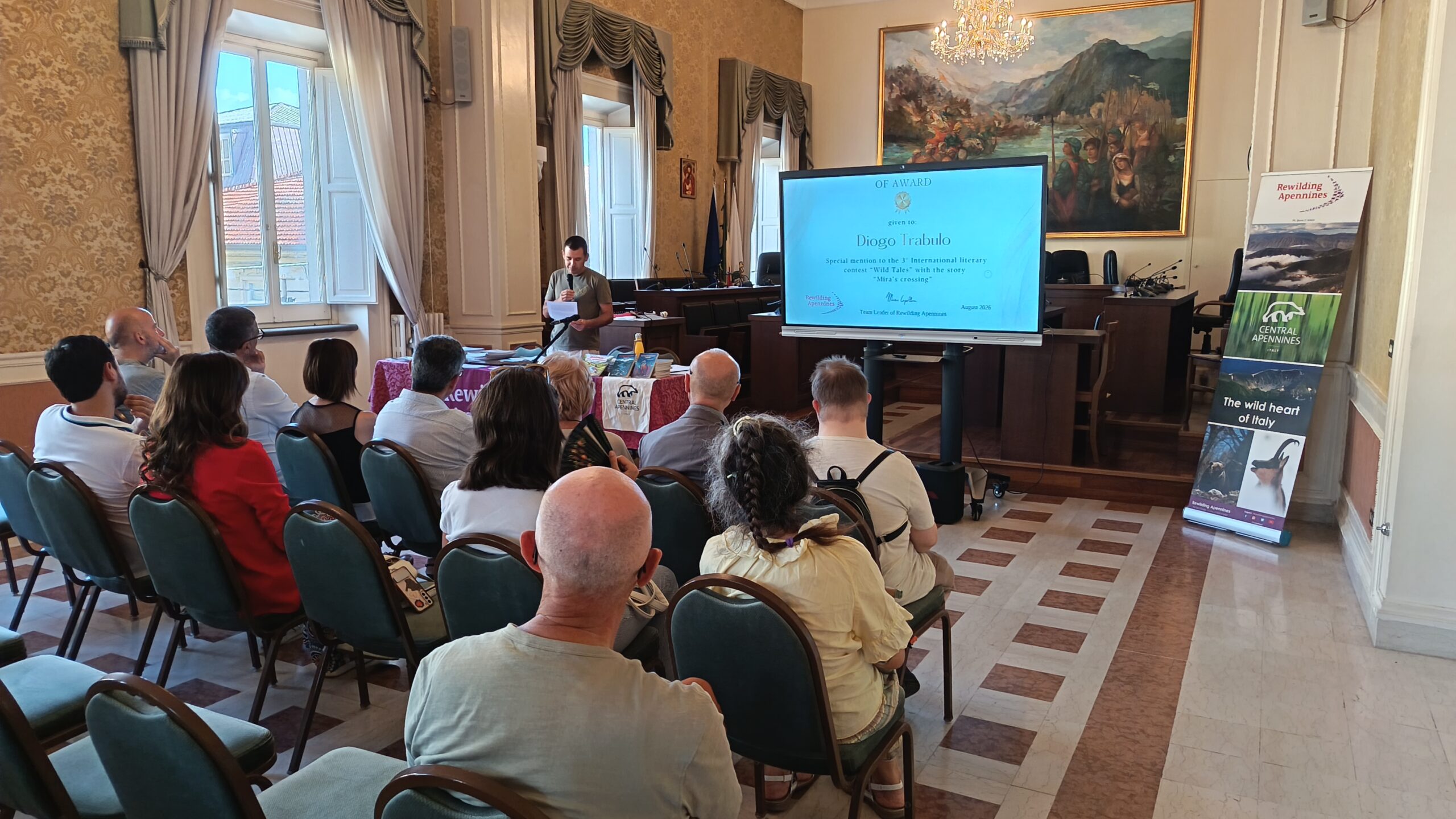
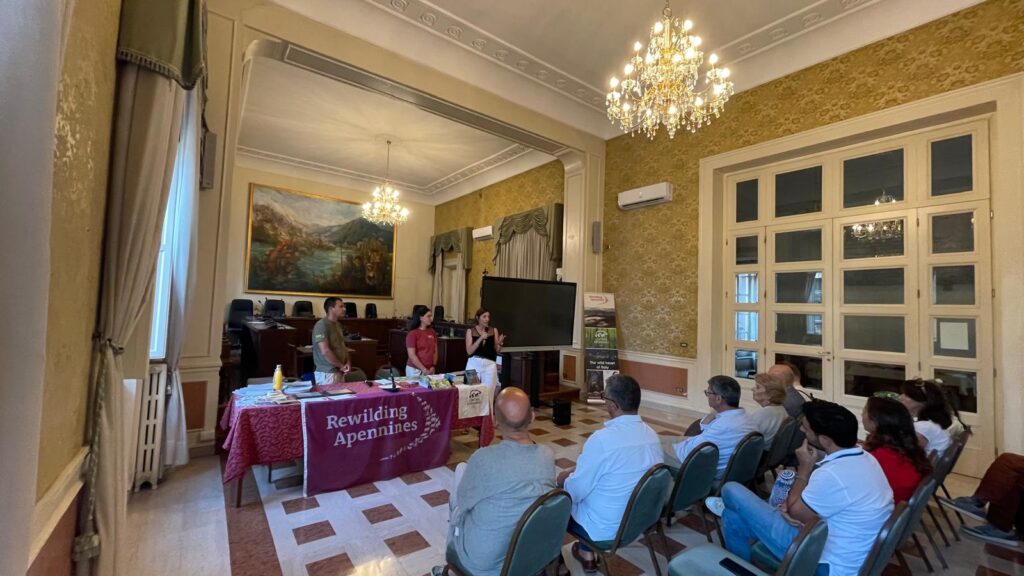
These were the introductory themes of the event hosted by Rewilding Apennines on 30 August in the council chamber of Sora. After warm greetings from councillor Manuela Cerqua, delegated to cultural services, the civic museum and the library, also on behalf of other municipal representatives present, the awards ceremony for the top three stories and a special mention followed. For each winning work, the jury read the story and the motivations behind its placing. Below are excerpts from the assessments given by the jury, composed of Rewilding Apennines team members Mario Cipollone, Team Leader, Angela Tavone, Communications Manager, and Daniela Gentile, Communications Officer.
Special mention — Mira’s crossing, by Diogo Trabulo
The author tells the story of Mira, who realises her dream of building an ecoduct or wildlife overpass near the village where she was born and grew up, and to which she returned through the pull of an inexplicable force — a pact with nature calling her back to her roots. This young woman’s sacrifice challenges gender stereotypes and the tension between those who stayed and those who left, a tension that returning can never fully resolve.
In fluent and elegant English, Portuguese author Diogo Trabulo condenses a richly layered and powerful plot into the three pages set by the competition, at times losing pace and giving the jury the impression of not treating the various themes introduced with equal attention, leaving them to the reader’s imagination with a degree of arbitrariness. Mira’s Crossing earned a special mention precisely because of this contrast — the overall assessment was, nonetheless, very positive.
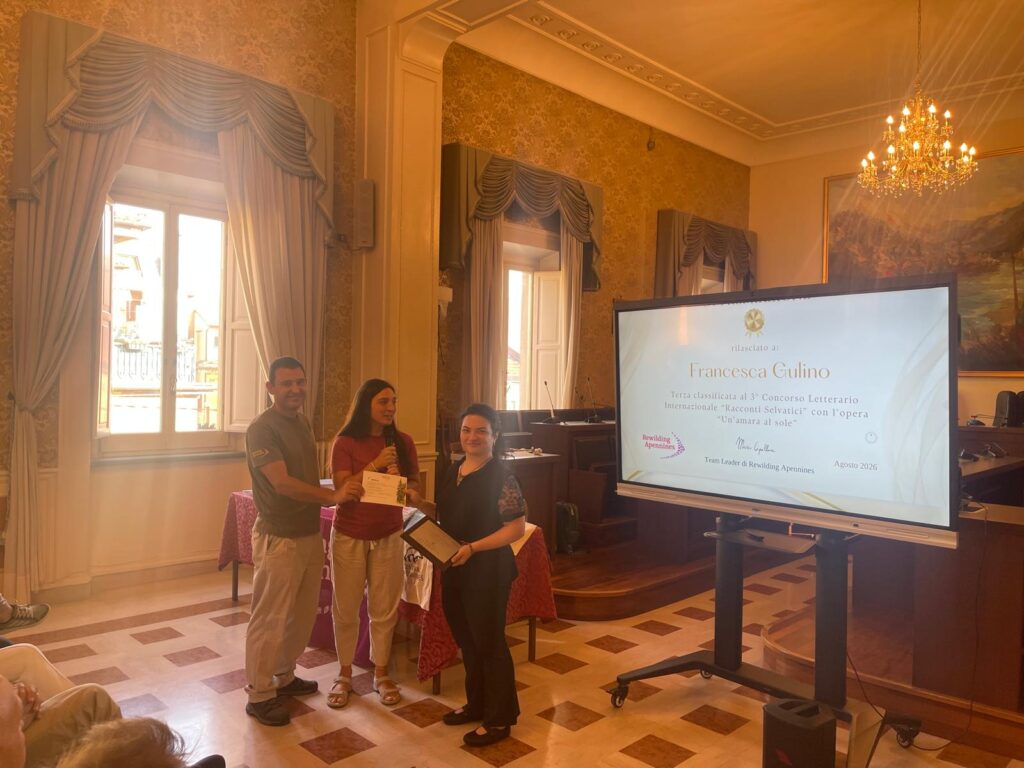
Third place — An Amara in the sun, by Francesca Gulino (100€ prize)
Original literary invention and a sustained rhythm, thanks to a monologue and dialogues that are never predictable yet always functional to the plot, earn this story a place in the top three, along with the jury’s suggestion that it be turned into a short film — perhaps at the next KinoAppennino. The protagonist agrees to share a café table with a beetle, despite his instinctive repulsion towards insects, demonstrating that coexistence is grounded in knowledge and in the recognition of every living being’s right to exist, breaking free from the existential and ecological isolation of modern humanity.
Second place — The hour between dog and wolf, by Linda Rossini (200€ prize)
Author Linda Rossini gives us in this story a prose that is never predictable and a naturalistic detail that is never excessive. The dialogues are authentic — neither contrived nor rhetorical. In a page and a half, the reader finds everything: description, action, conflict, resolution.
The wisdom of tradition lives on in the use of livestock guardian dogs — the so-called “white weapon” that for millennia has assisted shepherds of the Central Apennines and other parts of the world in countering predation by large carnivores — represented in the story through this statement by the farmer protagonist: “When the wolf is gone, the dog will be gone too, and when the dog is gone, so will we.” The power of this definition of coexistence is in no way didactic; it is rendered through images, enhancing the narrative function that is the short story’s own.
First place — The last wolf of Trinacria, by Benedetta Troni (400€ prize)
In this story, author Benedetta Troni narrates the tale of a failure of coexistence, brought about by the extinction of the Sicilian wolf (Canis lupus cristaldii), a subspecies of the Italian wolf that colonised Sicily — known in antiquity as Trinacria for its triangular shape — approximately 21,000 years ago, and which was driven to extinction by direct human persecution in the first half of the twentieth century.
This story addresses readers with the profound warning of the irreversibility of extinction, of the immense biological loss it entails, with species removed forever from ecosystems to which they were functionally bound through millennia of adaptation that made them irreplaceable — including in their relationship with the human communities they cohabited. The work invites reflection on the need to learn to live alongside the wild (and beyond) to prevent the repetition of mistakes born of past ignorance, mistakes that should be overcome thanks to present-day knowledge, if there is the will to learn from positive experiences and put them into practice.
Of the winners, only Francesca Gulino was able to attend the awards ceremony in person, despite the considerable distance between Sora and the province of Como where she lives. Nevertheless, each story read aloud stimulated much reflection and discussion among those present on the themes addressed.
A few weeks before the event, Rewilding Apennines published a post on its social media channels inviting people to share a personal experience with wildlife, in a constructive and non-confrontational way, as a kind of “competition within the competition.” Three of these comments were shared with the Sora audience, which gave the floor to councillor Salvatore Lombardi, delegated to environmental affairs, who shared some personal stories about wildlife with the audience and encouraged other participants to share their own, demonstrating how the natural world is a source of great inspiration and how the wildlife of the Central Apennines should never be taken for granted.
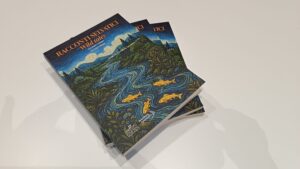
The second part of the event was dedicated to the presentation of the second volume of Wild Tales, published by D’Abruzzo Edizioni Menabò and printed in August 2026, collecting the stories from the 2025 literary competition, whose theme was dedicated to free-flowing rivers.
The presentation opened with the premiere of a short documentary, created by Treehouse Films and produced by Rewilding Apennines, entitled “Wild Lyrics. A new sound for the Liri River”. It is dedicated to the removal of the Cesapresa weir on the Liri River (which also flows through the city of Sora), completed in September 2025 with the support of the Open Rivers Programme and Rewilding Europe.
Featuring a free-flowing river on its cover, with fish swimming within it, the book contains 13 stories in Italian and English that explore the theme through different genres, yet all of them giving dignity to one of the most fragile and troubled ecosystems of the landscapes we inhabit. The book’s preface is dedicated to river restoration and to the experience of Rewilding Apennines and other partners and stakeholders working to restore rivers to the highest possible ecological functionality, also for the benefit of human communities. It is also dedicated to a dear person, a friend and a skilled professional, Giandomenico Mercuri, who passed away too soon, and who did so much to design and see completed the first removal of river barriers in the whole of central and southern Italy: the one on the Giovenco River in October 2024, when five obsolete and unused concrete weirs in the upper valley of the watercourse were demolished.
Those wishing to purchase the two volumes of Wild Tales produced by Rewilding Apennines may write to the organisation by email at: info@rewilding-apennines.com
The event, so rich in contents and ideas, concluded with the donation by Rewilding Apennines to the Municipality of Sora — in the person of councillor Manuela Cerqua — of both volumes of Wild Tales, destined for the municipal library, which recently set an environmental education section.
Finally, a mention and a warm welcome was extended to the presence in the audience of Prof. Veronica Gianello of Queens College, New York, who since last spring has been collaborating with Rewilding Apennines to use Wild Tales as a text for her Italian ecological literature course, including through a dedicated online meeting on rewilding and the book’s specific theme. On 26 October, a session will be organised for the new university semester, focusing on the theme of free-flowing rivers, with readings from the stories in the second volume of Wild Tales.
To the general satisfaction of the organisers and the audience, the event concluded with a social gathering offered by the organisation.