
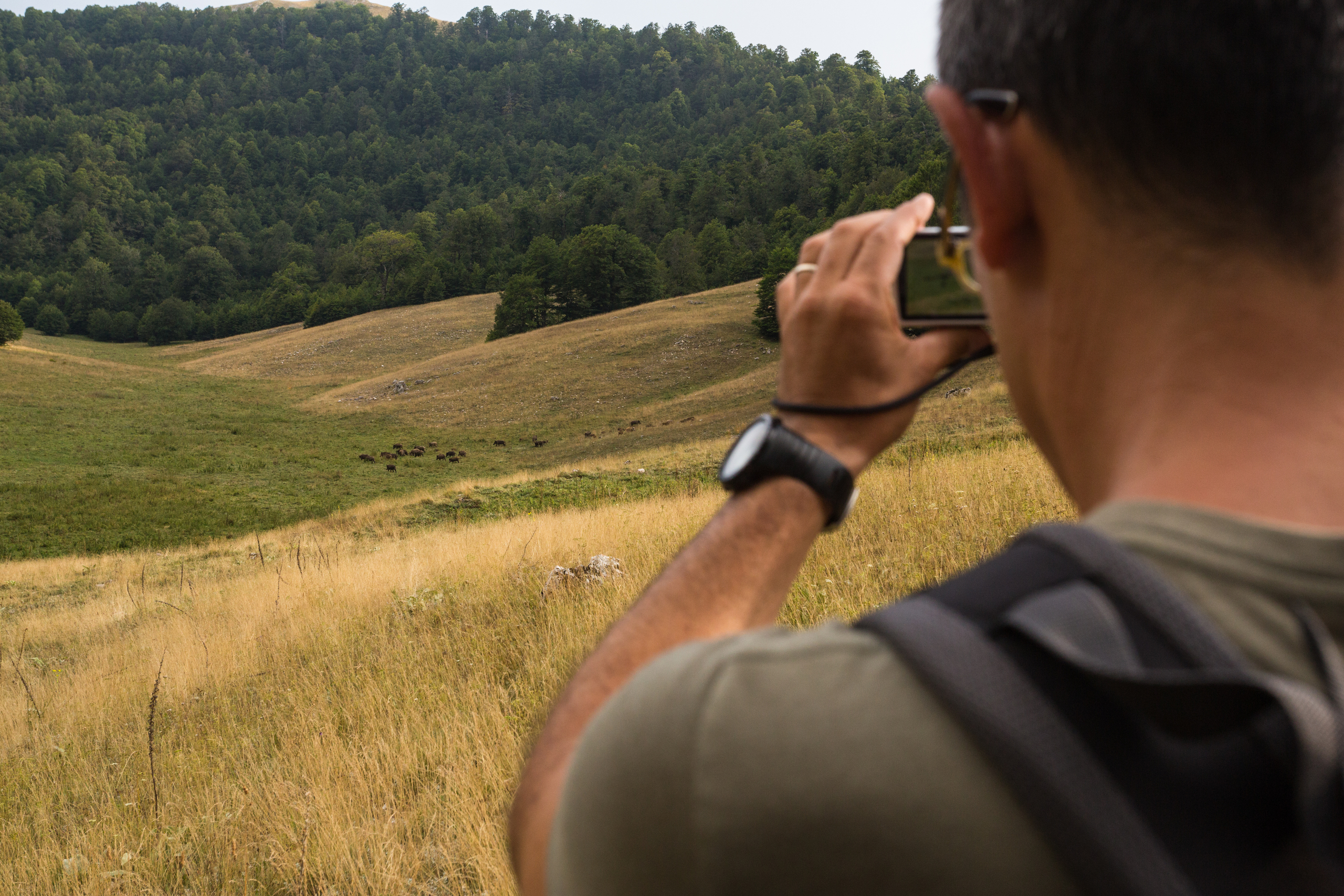
What is the real value of rewilding for the communities that live it every day? In the case of Rewilding Apennines, the answer is not only environmental, but also deeply economic: €431,000 generated for local economies, largely over the past two years.
.
.…
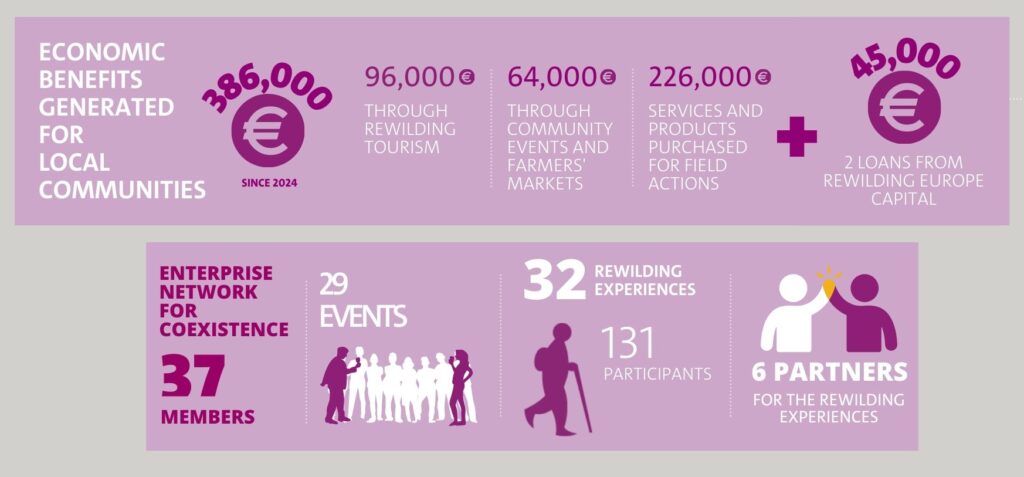
In the last two years, Rewilding Apennines has generated €386,000 in direct economic value for local communities. This impact has been built step by step through on-the-ground actions, trusted relationships and targeted investments, demonstrating how nature conservation can also become a driver of development for the inner areas of the Apennines — and a key enabling factor for long-term ecological recovery.
In addition, €45,000 derives from two loans granted in previous years by Rewilding Europe Capital, supporting a local enterprise, Wildlife Adventures, our partner specialising in nature-based experiences. An investment that looks to the future, accompanying the growth of locally rooted, nature-based economic models aligned with conservation goals.
In small mountain communities and inner areas of the Apennines, where economic opportunities are often limited and highly fragmented, this figure represents far more than a single investment. It reflects a distributed and locally rooted flow of value, supporting everyday services, small businesses and community initiatives that help keep these landscapes inhabited and alive.
A significant share of this impact comes from operational rewilding activities. €226,000 has been spent on locally sourced services and products, activating businesses across the territory. From the maintenance of field vehicles to the supply of materials, from logistics to professional consultancy services requiring specific technical expertise — such as river ecology, environmental engineering and other specialised fields.
This is an everyday economy, often invisible, yet essential to the vitality of mountain communities.
Alongside this, rewilding also becomes an experience. Through our Rewilding Experiences programmes—developed in collaboration with international partners to enable visitors from around the world to discover and experience rewilding first-hand—we have delivered 32 tours, welcomed 131 participants, and generated €96,000. These experiences go beyond “simple tourism” and consistently involve members of our coexistence business network, which now includes 37 local enterprises. From accommodation and food to thematic encounters and on-the-ground activities, they help create authentic, place-based experiences.
A tangible way to give voice and support to those who, more than anyone else, know how to represent and tell the story of these landscapes.
The value generated also extends to the community dimension. €64,000 has been activated through events, festivals, farmers’ markets and other community initiatives, further strengthening support for local businesses and for networks promoting coexistence between human activities and wildlife. These moments help reinforce social cohesion and shared ownership of rewilding outcomes.
…
…
These figures do not include the contribution of volunteers, which has not been economically quantified but is no less important. Each year, we host around 60 long-term volunteers, accommodated in houses we rent in three small villages: Ortona dei Marsi, Pettorano sul Gizio and Casali d’Aschi. In these communities, their presence not only helps revitalise the local economy, but also fosters meaningful human relationships and cultural exchange, strengthening the social fabric that underpins resilient landscapes.
Perhaps these figures, taken individually, will not change the world.
But in the small mountain communities of the Apennines, they can make a real difference. Not only by supporting local incomes, but also by helping to build awareness and long-term support for landscape-scale nature recovery.
Because rewilding is not only about the return of nature.
It is about the people who live these landscapes.
…
.
