
2025 has taken us through many key milestones: from rivers flowing freely once again to communities choosing to move forward together. Season after season, these results show how rewilding becomes a tangible reality through people, patience and collective action.
The year also ends with news we wish we did not have to share: another bear has been killed on the roads of the Apennines. It is a stark reminder of how much work remains to reduce a level of mortality that is unsustainable for such a fragile population — five bears were lost in 2025 alone. Urgent challenges lie ahead, to be met with the same determination that has guided us in recent years.
…
.…
Enterprise Network for Coexistence
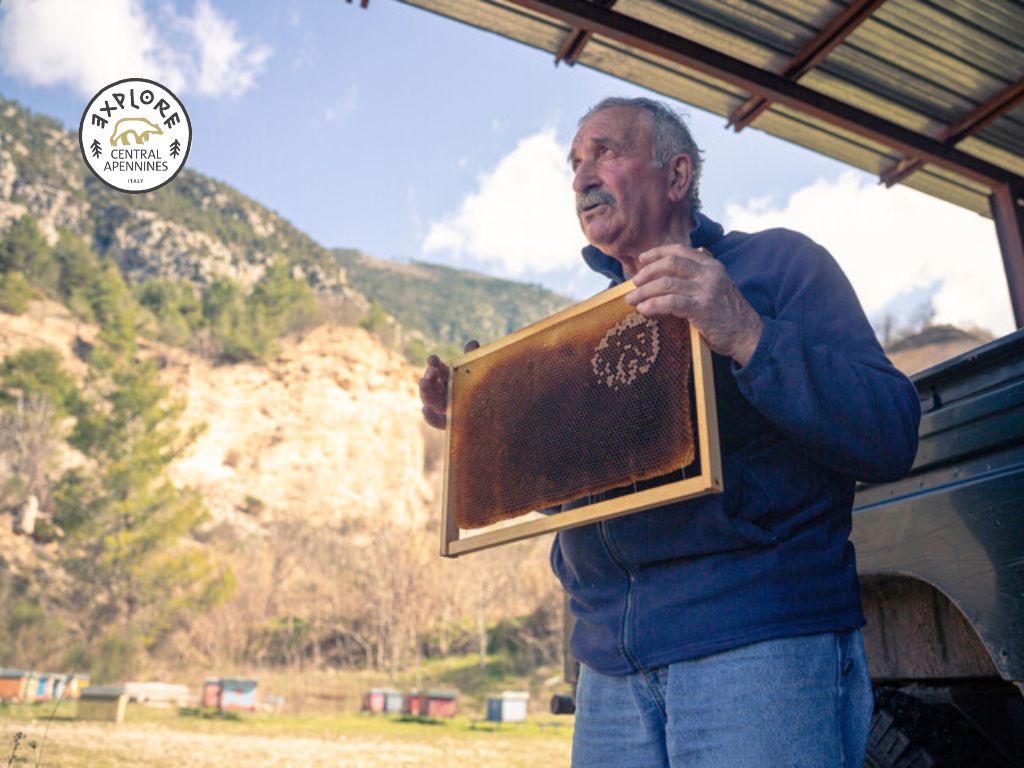
2025 was the year in which Rewilding Apennines’ Enterprise Network for Coexistence truly took shape. Thirty-seven local businesses – artisans, farmers, restaurateurs and tourism operators – chose to work together, sharing a vision of an Apennines where the local economy is renewed and nature is part of the future.
A shared visual identity, storytelling through the Explore Central Apennines Instagram channel, and 12 experiences featured on the European Wilder Places platform have given visibility to this journey. It was celebrated with the first Bear Smart Communities Festival, which brought together over 250 people around a vision of development rooted in coexistence.
…
Rewilding is about coming together
Nearly 40 public events – including festivals, film screenings and workshops – gave us the opportunity to meet and engage with many people, shining a light on the power of rewilding as a shared, collective experience. Moments when nature, culture and communities came together, creating new spaces for participation and dialogue.
Among the most significant events were the first Bear Smart Communities Festival in Vastogirardi, where nature blended with art, music and food, and KinoAppennino, which brought 35 artists to the heart of the Central Apennines. In Pettorano sul Gizio, the town itself became an open-air film set, with the community and its spaces featuring in 18 short films.
These were joined by the second edition of the Italicus National Conference, organised together with the association Io non ho paura del lupo, a space for discussion and exchange on our relationship with this large predator.
…
ANDREA BOCCINI
…
A new future for our rivers
From the removal of the barrier on the River Liri to the release of native trout and crayfish from our breeding and reintroduction centres, 2025 has confirmed Rewilding Apennines’ commitment to river restoration and our ability to turn objectives into tangible results. In this article, we had already retraced the key steps and most significant milestones achieved so far.
This work on the ground has been accompanied by important recognition. In addition to the support of the Open Rivers Programme and acknowledgement from Dam Removal Europe, we were invited to share our experience at the conference “The European Nature Restoration Regulation: new challenges and opportunities for restoring river environments”. Held on 15 January, the event brings together institutions, universities, river basin authorities, NGOs and experts of national and international standing.
A meaningful acknowledgement of the work carried out to restore ecological connectivity in our rivers.
…
Restoration in numbers
The interventions we carry out on the habitats of the key species we work with are numerous and carefully targeted, but they all share the same goal: reducing the risk of mortality, improving ecological conditions and lowering conflict with people. From removing barbed wire to securing wells, reservoirs and other hazardous structures for both wildlife and people, each action helps nature regain its balance and allows wildlife to live more safely.
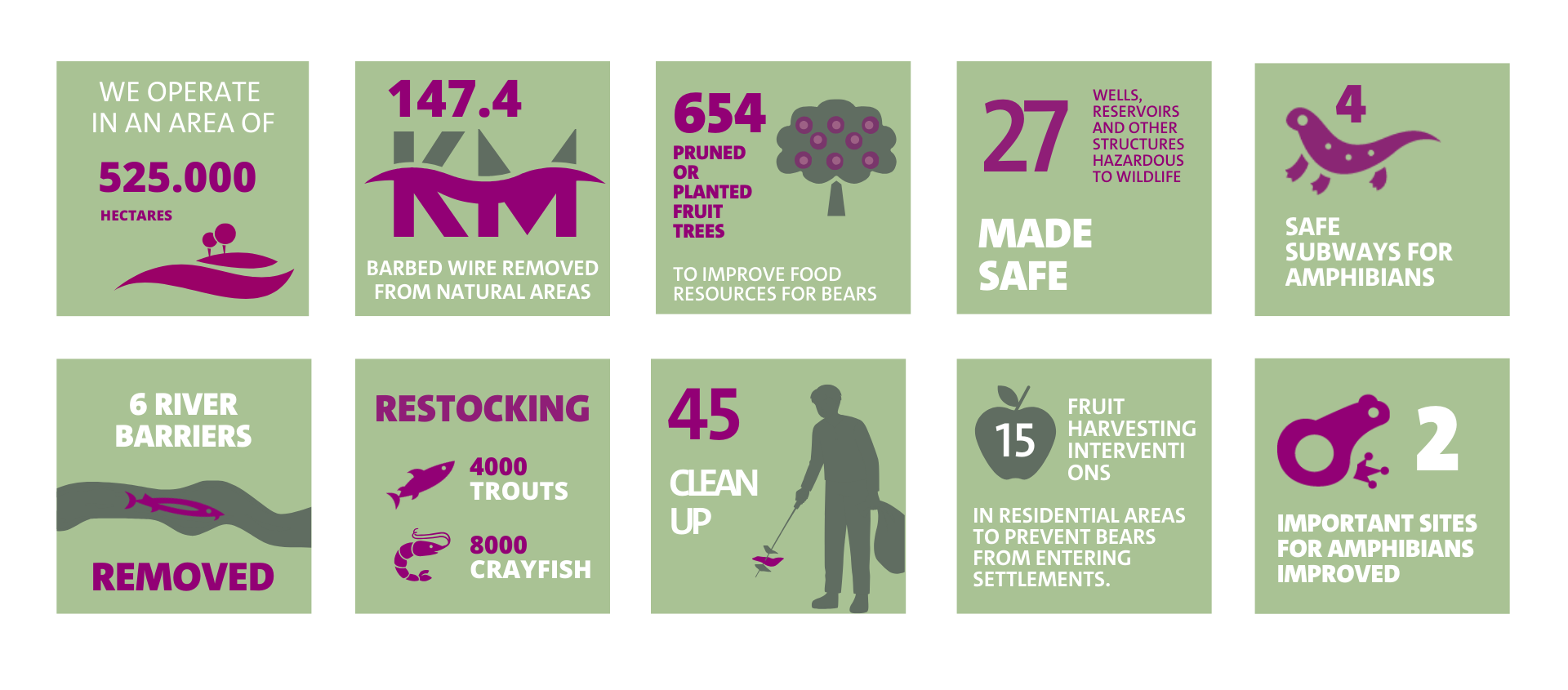
Coexistence in action
Coexistence is built day by day, through care, listening and practical solutions. In our work to prevent damage caused by large carnivores – particularly bears – what guides us are patience, experience and openness to dialogue. This is the approach we aim to share with local communities: concrete actions that show how coexistence is possible, even with the species that most challenge the way we live in these landscapes.
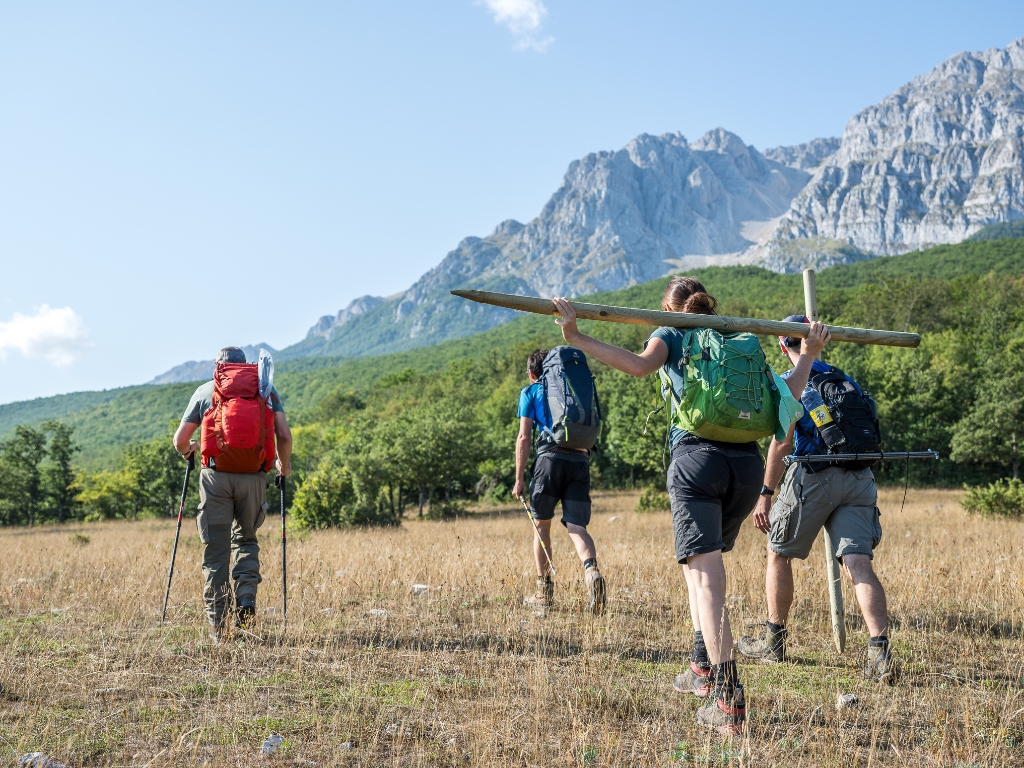
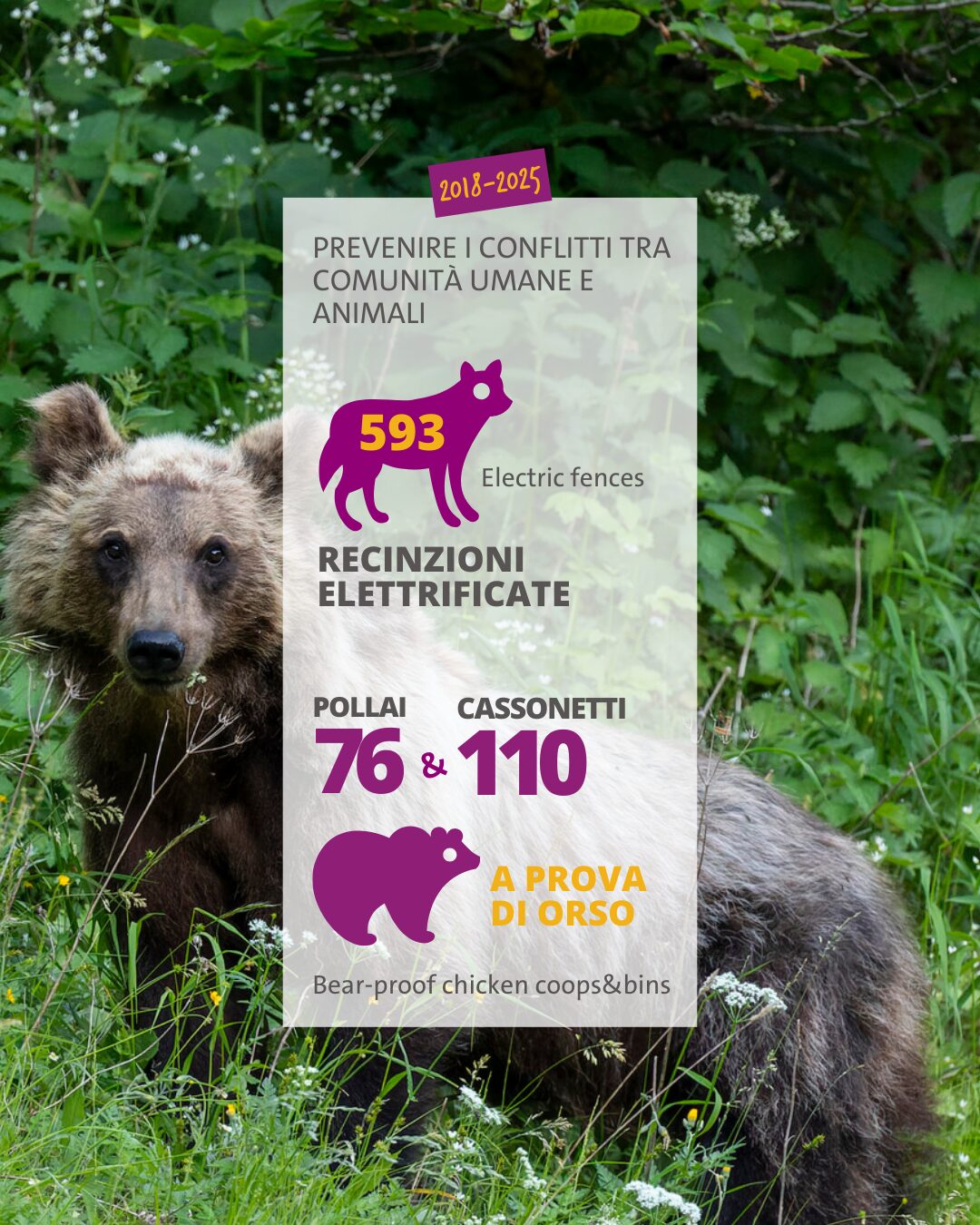
In 2025, we installed 80 electric fences, 53 bear-proof bins and reinforced 5 henhouses. These tools are essential for reducing damage, preventing conflict and avoiding bears becoming accustomed to human presence. Together with interventions carried out in previous years, this brings the total to 779 interventions overall.
…
…
Griffon vultures
We have always given griffon vultures special attention. Today, between 300 and 350 individuals are soaring over the Central Apennines — a population growing slowly but steadily, the result of years of conservation work. It is a positive sign, although one that still coexists with high levels of human-caused mortality.
In collaboration with the Carabinieri Biodiversity Unit of Castel di Sangro, we monitor the population through captures, radio-tracking and annual counts, which are essential for estimating population size and breeding success. But our work goes beyond monitoring alone. Thanks to GPS tracking, we regularly check feeding sites — a crucial action for better understanding the species’ ecology and, above all, for the early detection of poisoning or suspected poisoning events.
Poisoning remains the most serious threat. Up to 100 vultures can feed on a single carcass, meaning that one poisoning incident can affect an entire group. Added to this are collisions with wind turbines and lead poisoning, pressures that make vulture survival a global challenge.
Between 2021 and 2025, we captured and released 254 griffon vultures, 78 of them fitted with GPS transmitters, carried out 2,931 inspections at feeding sites, conducted weekly monitoring at wind farms to assess collision risks, and completed six annual population and breeding counts.
This ongoing work helps to prevent risks, respond when needed, and protect one of the most iconic species of the Apennine skies.
…
…
Our force: the volunteers
Over the past five years, we have had the privilege of welcoming 220 volunteers from 27 countries around the world. Without their time, energy and passion, much of our work simply would not be possible.
To all of them, we offer our heartfelt thanks. On our side, we will continue to work to ensure that the experience of living, learning and working with us is ever richer in meaning, personal growth and genuine connections.
…
…