
With the support of the Open Rivers Programme, Rewilding Apennines is opening two new strands of work on the rivers of the central Apennines: mapping the barriers of the Aterno-Pescara basin, and preparing the next removal on the Giovenco, where five barriers were already taken out in 2024.
.
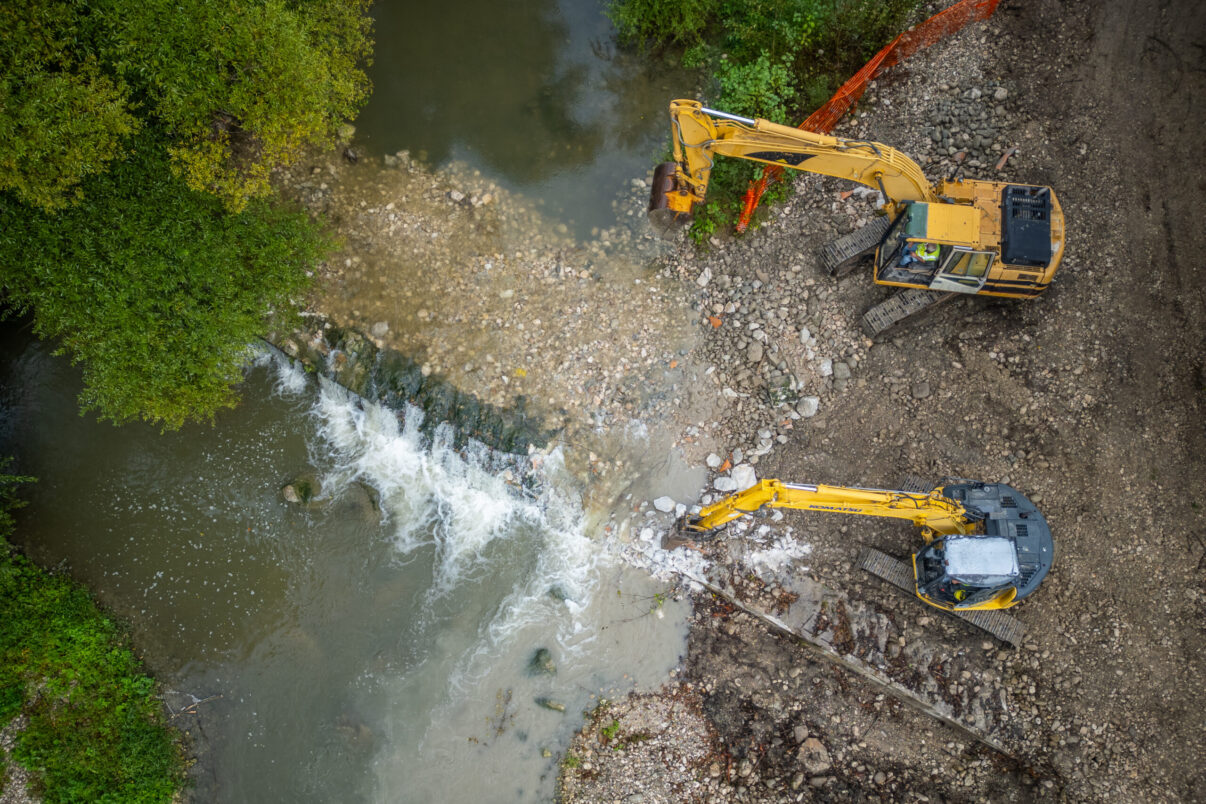
Two new actions funded by the Open Rivers Programme are taking forward the restoration of the rivers of the central Apennines: the barrier survey of the Aterno-Pescara basin, and preparations for the next removal on the Giovenco, where in 2024 Rewilding Apennines had already demolished five weirs through the Giov&Go initiative.
Both interventions form part of a river restoration programme that Rewilding Apennines has been running in the central Apennines since 2020, the year of the first systematic study of barriers in the region: 169 kilometres covered along the Liri, Sagittario, Gizio and Sangro rivers, 289 structures recorded. That work gave rise to the first two removals, on the Giovenco in 2024 and on the Liri in 2025, which earned the organisation recognition from Dam Removal Europe as a European frontrunner in the field. We wrote about it in our article “The pioneering role of Rewilding Apennines in restoring the rivers of the central Apennines“.
One barrier at a time, up to 25,000 km of free-flowing rivers
Europe’s rivers are among the most fragmented in the world: roughly 1.2 million barriers interrupt their course, almost one every kilometre and a half, and most are obsolete structures, often forgotten, that no longer serve any purpose or anyone. Europe’s rivers are among the most fragmented in the world: around 1.2 million barriers interrupt their course, nearly one every kilometre and a half, and most are obsolete structures, often forgotten, that no longer serve any purpose for anyone. The good news is that 68% of these structures are under two metres high: they are not large dams, but small weirs that can be removed with relative ease. What matters is knowing where they are and how to do it.
This is where Article 9 of the Nature Restoration Regulation comes from, the article the regulation devotes entirely to rivers: member states must survey artificial barriers and identify those to be removed, starting with obsolete ones that no longer serve hydropower, irrigation or water supply. The target is 25,000 kilometres of European rivers returned to free flow by 2030.
A figure like that is set in Brussels, but it is reached one river at a time, one barrier at a time, and this is precisely the road Rewilding Apennines intends to travel. Not isolated interventions, but a sequence: in a territory where removals of this kind had no precedent, renaturalisation advances one stretch at a time, with method and a long-term view.
National and regional authorities recognise the pressures on watercourses and the need to remove barriers, but they do not always have the resources to survey them, let alone to demolish them. The support Rewilding Apennines has received from the Open Rivers Programme and from Rewilding Europe, which has made both the past and the current interventions possible, partly covers that gap, and also indicates how it can be closed: on one side the institutions, with administrative capacity and licensing powers; on the other the non-governmental organisations, with their own resources, technical expertise and the freedom to move quickly. Neither side, alone, gets to 25,000 kilometres of free-flowing river.
.
Aterno-Pescara: mapping the barriers, setting the priorities
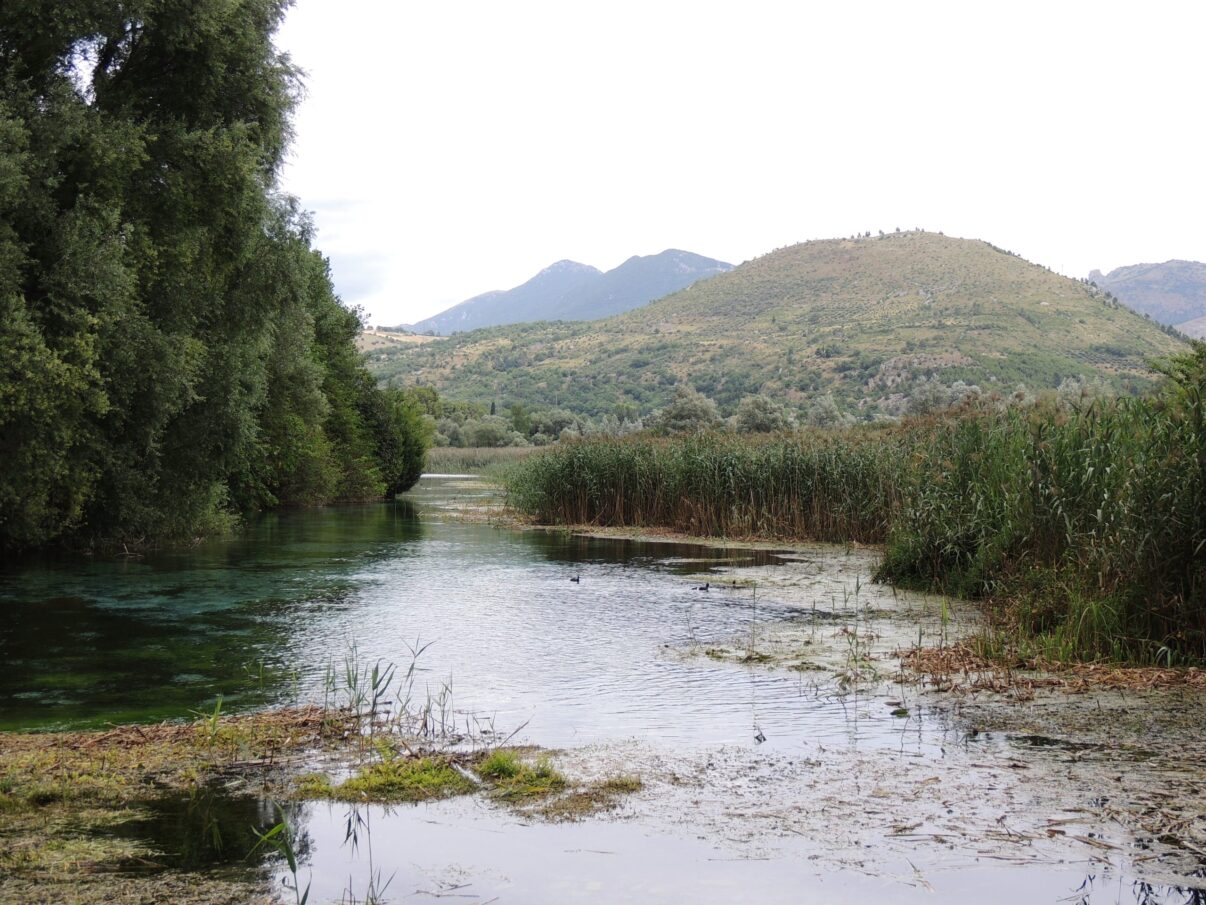
The first of the two new projects concerns the Aterno-Pescara basin, the largest in Abruzzo, covering some 3,190 square kilometres from the Monti della Laga down to the Adriatic at Pescara.
Before the industrialisation, pollution and artificialisation of the twentieth century, these watercourses held substantial populations of migratory species: anadromous fish such as twaite shad (Alosa fallax) and sturgeons (Acipenser spp.), and the European eel (Anguilla anguilla), which makes the opposite journey, from the sea to inland waters. Today the basin is the only one on the entire Adriatic side to host a population of brook lamprey (Lampetra planeri), threatened by exploitation and habitat fragmentation.
Between July 2026 and July 2027 the work will consist of mapping the longitudinal barriers along the Aterno, the Pescara and their tributaries (Vetoio, Sagittario, Tirino, Raio, Vera, Vella, Orta, Lavino, Cigno and Nora), and of defining priorities for future removals.
The outcome will be a complete inventory and a priority list, with the aim of reconnecting between ten and thirty kilometres of watercourse, identifying at least two barriers for removal, improving conditions for the fish populations present, and facilitating the potential return of species that have disappeared locally or been severely reduced.
.
Giov & Go 2.0: preparing the next removal
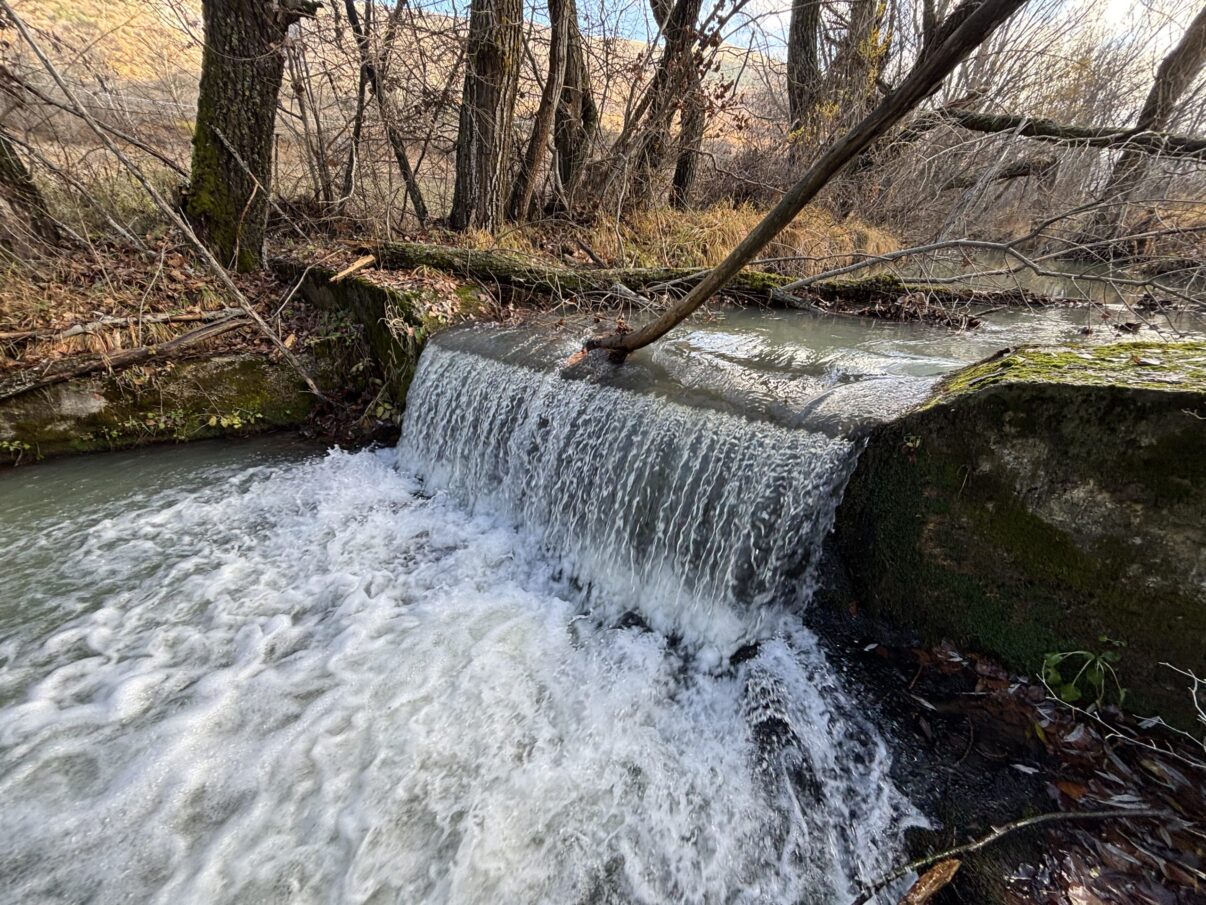
The second project continues the defragmentation of the Giovenco, a river that rises inside the Abruzzo, Lazio and Molise National Park before reaching the Fucino plain, where it dwindles into a network of irrigation channels. It was once interrupted by more than fifteen barriers built for hydropower, flood regulation and irrigation, many of them now disused. The first five, in the upper reach, were removed in 2024 through the Giov&Go project.
The target now is the Puntarola weir, 8.3 kilometres downstream of the last one demolished, in the municipality of Ortona dei Marsi, where the river’s discontinuity remains pronounced. Its removal would appreciably extend the stretch returned to free flow. This phase of the project does not include demolition, but the steps that make it possible: the technical and economic feasibility study, the environmental surveys documenting the expected ecological benefits, the detailed design, the start of the permitting process, and the involvement of the local community from the outset. The experience Rewilding Apennines has built up through the first removals on the same river and on the Liri provides a method already tested on the technical and scientific, administrative and participatory fronts.
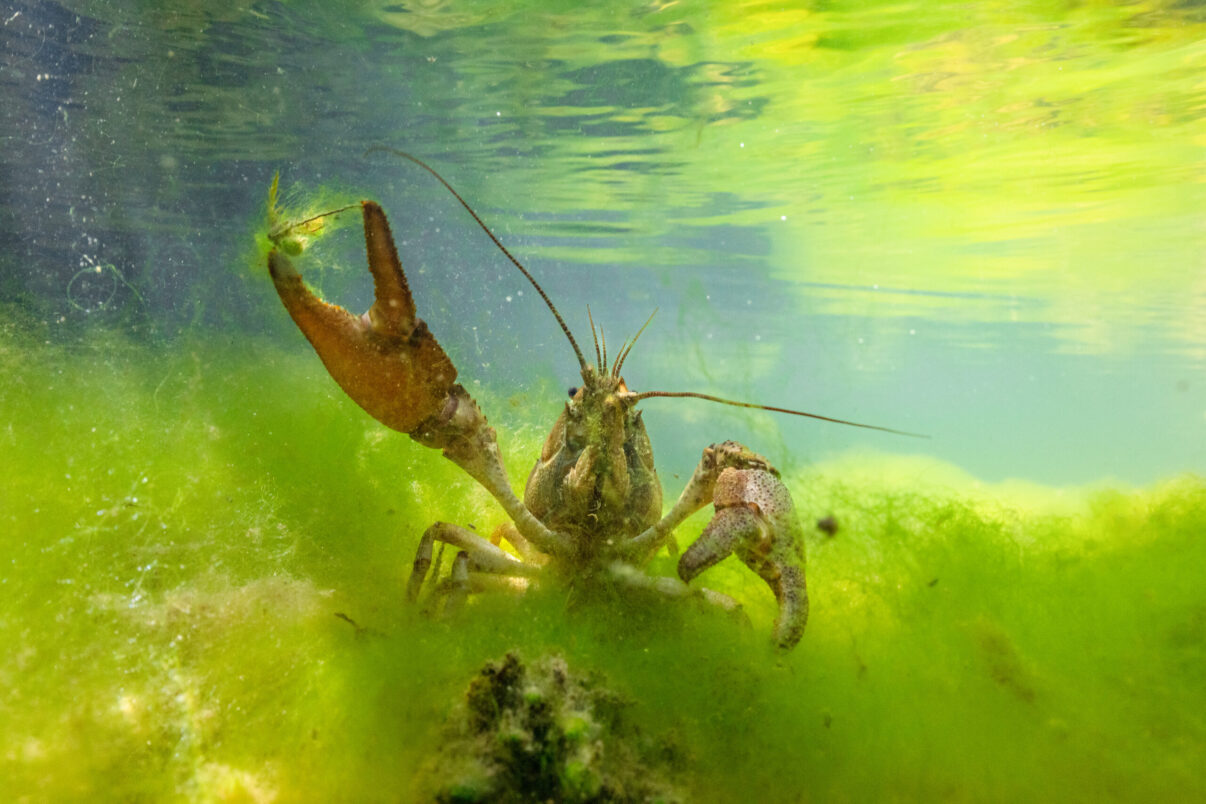
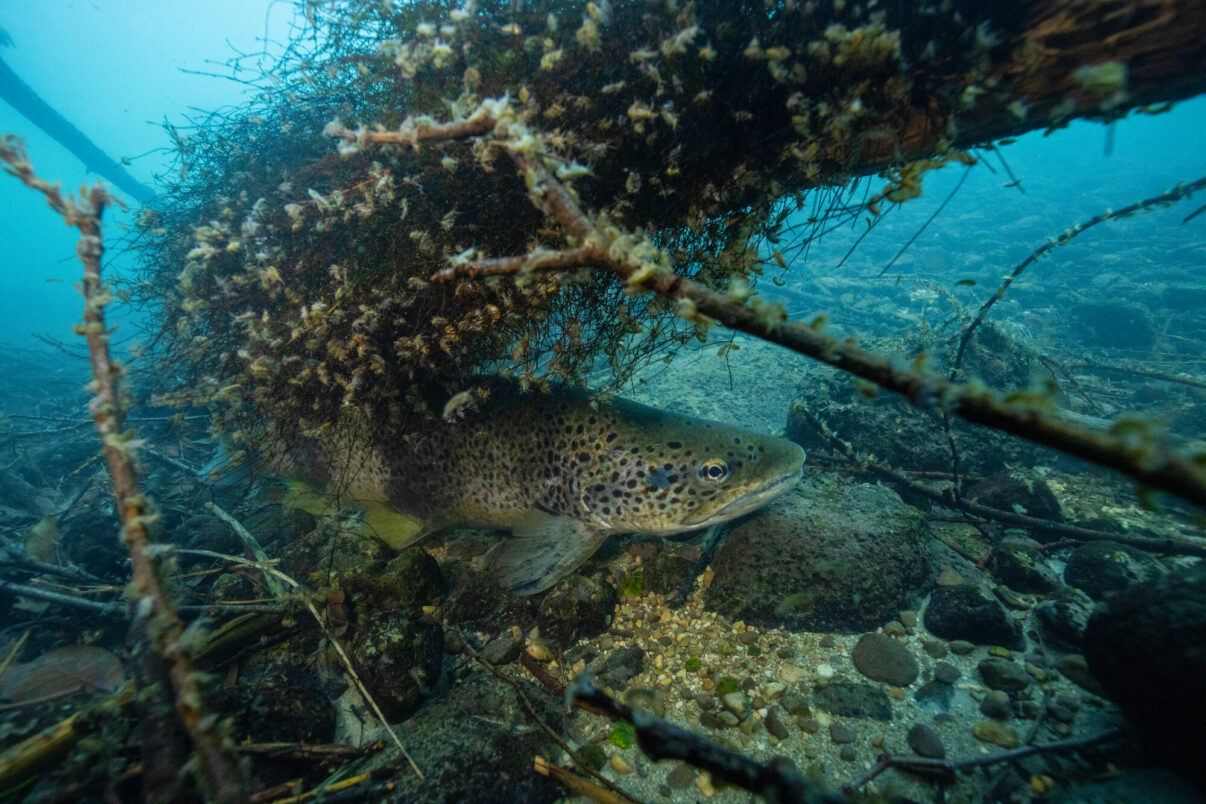
This particular stretch has concrete potential for the reintroduction or restocking of native species, in particular Mediterranean trout (Salmo ghigii) and the native white-clawed crayfish (Austropotamobius pallipes complex); the focal species also include the otter (Lutra lutra), which is gradually returning to the rivers of the central Apennines and which, given suitable habitat and an adequate prey base, could recolonise the Giovenco as well.
The project has a long-term ambition: to restore the entire river corridor and make the Giovenco, along its natural reach, the first fully free-flowing river in the Apennines.
.
Looking ahead to a future without river barriers: what changes, and for whom
A river works as an unbroken corridor from source to mouth, along which water, sediment, organic matter and animals travel. Every barrier breaks it into isolated segments. Restoring continuity means fish can once again move up and down, which is vital for species that must travel to breed, spawn, feed and find shelter. Continuity is also genetic connectivity between populations, and the possibility of recolonising a stretch after a flood or a drought: without it, each upstream population remains isolated, and a single unlucky event is enough to wipe it out.
Then there is sediment. A weir holds back gravel and sand upstream and starves the reach below. Above the barrier the water slows, stagnates, warms and loses oxygen, and the bed silts up. Removing barriers reactivates the natural transport of sediment, rebuilding the banks and restoring the clarity and oxygenation on which animal and plant species depend.
More natural banks also mean more varied and intact riparian habitat. These are the richest environments in the whole system, refuge and corridor for the species that live between water and land, the otter first among them.
The return of native and migratory species, then, is not a fourth objective in its own right: it is the consequence of the first three. Once the physical environment is rebuilt, continuity, sediment, banks, the fauna follows. And it is the precondition for any spontaneous recolonisation, restocking or reintroduction: Mediterranean trout, brook lamprey or native crayfish can only return where the habitat can hold them.
The people who live along the rivers benefit from these changes too, through what a healthy watercourse gives back, from the chance to spend quality time in an intact natural environment to the opportunities linked to nature tourism.
These are the reasons Rewilding Apennines has been working on the rivers of the central Apennines since 2020. The Aterno-Pescara survey and the preparation for removing the Puntarola weir on the Giovenco are not two isolated interventions: they belong to a body of work that proceeds by stages. First study, then design, finally remove. Every stretch freed makes the next step more feasible, and every barrier recorded becomes a decision that someone, sooner or later, will be able to take.