

A recent international study, with a contribution from Rewilding Apennines, examines the opportunities and risks of bringing large wild herbivores back to Italy’s wood-pastures. These traditional rural landscapes were historically maintained by wildlife and pastoralism working together. Both have been declining, and as a result woodland is closing in and the landscape is becoming more uniform. Rewilding with large herbivores could help restore natural dynamics and reduce wildfire risk, but each application needs careful, case-by-case analysis of the social and environmental context.
.
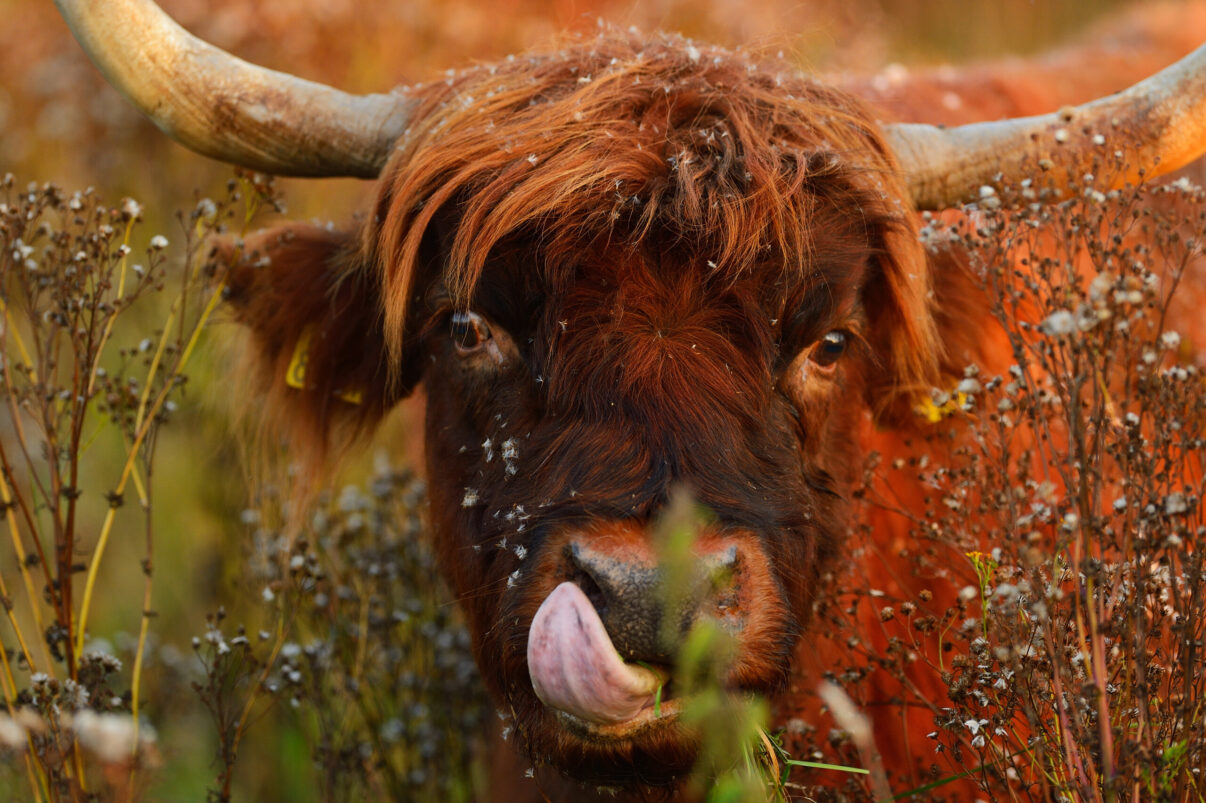
Italy’s landscapes bear the mark of centuries of farming and herding. That activity helped create and maintain wood-pastures: grasslands dotted with trees, standing alone or in clusters, that are rich in wild nature and cultural heritage. Pastoralism has contracted, and the large wild herbivores that helped maintain these landscapes in past centuries are now largely gone. Wood-pastures are therefore being steadily reclaimed by shrubs and trees, a process that threatens to impoverish local wildlife and make the landscape increasingly homogeneous.
The paradox of the closing forest
Increasing forest cover is seen as a tool against an increasingly rapidly changing climate, which can make the spontaneous spread of woodland look like an ecological win. But in ecology, not all green is equal. Uniform, unchecked forest cover risks smothering the species that make wood-pastures distinctive, many of which depend on open, sunlit spaces. It also erodes the value of these historic cultural landscapes.
Strategies are needed to manage the return of vegetation while preserving the ecological richness of these habitats. One of the most promising options is large herbivore rewilding: restoring communities of these large animals to a wild state. Weighing up such an option, however, requires a careful look at its socio-ecological implications. This is the focus of an international study recently published in the journal Ecosystem Services, to which Mario Cipollone, team leader of Rewilding Apennines, contributed. Its title is “Assessing the potential ecological functions, ecosystem services and disservices of megaherbivore rewilding in traditional rural wood-pastures”.
.
Using the past as a compass for the present
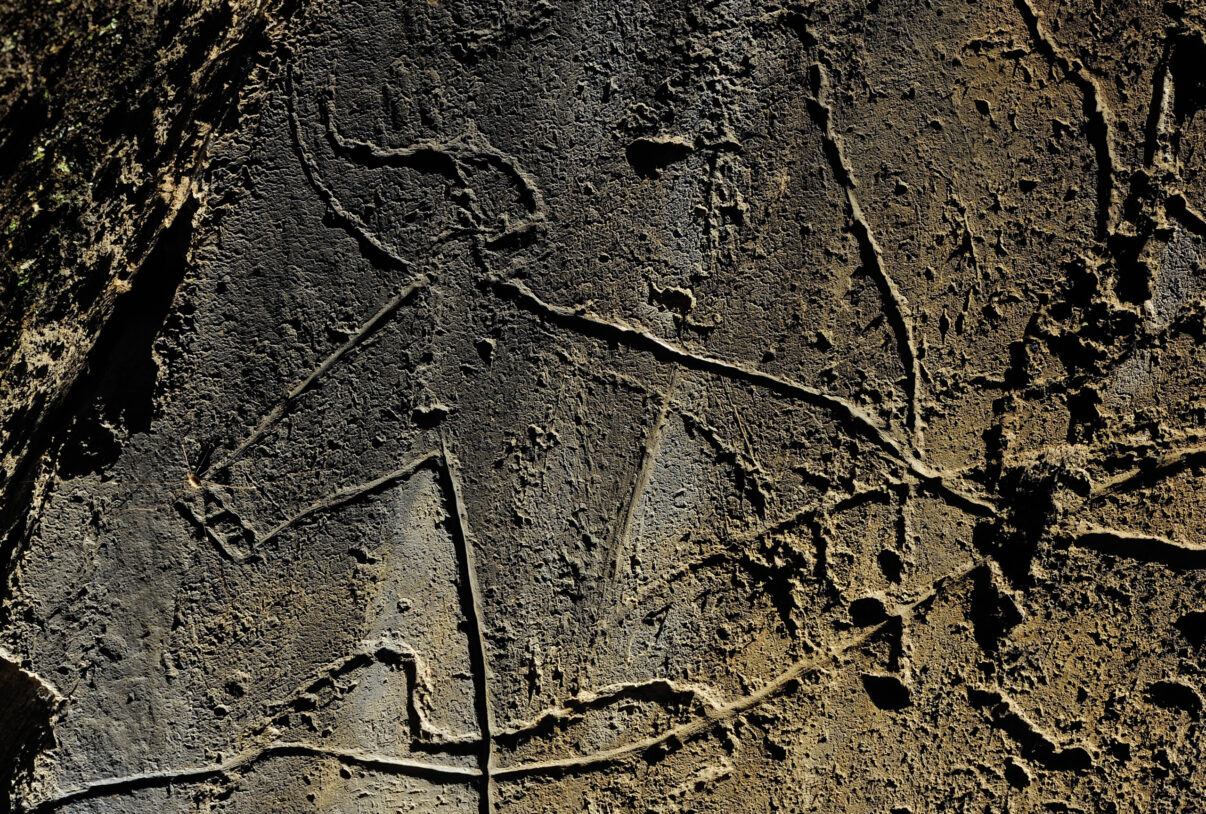
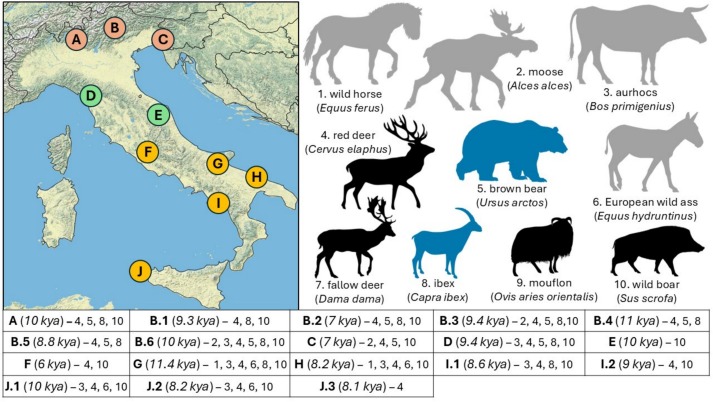
The study began with a basic question: what did Italy’s community of large herbivorous mammals look like before agriculture and livestock farming changed it? To find out, the researchers used the fossil record to reconstruct the environment of the early Holocene. The Holocene is our current geological epoch, which began after the last glaciation, and its early part runs from roughly 12,000 to 6,000 years ago.
At that time, before human pressure fragmented the land and intensively reshaped its landscapes, the Italian peninsula supported a range of large wild herbivores. They were unevenly distributed across the country’s three main biogeographical regions: Alpine, Continental and Mediterranean. Large grazers such as the aurochs (Bos primigenius), European bison and wild horse dominated the lowlands and open glades of the Continental and Mediterranean regions. They lived alongside widespread forest and mixed feeders such as red deer, roe deer and wild boar. Elk (moose) occupied the wetlands and colder forests of the Alpine and Continental regions, while Alpine ibex and chamois lived on rock faces and at high altitude.
The researchers then compared this rich past community with present-day populations, which also include “new natives” that arrived or were introduced over recent millennia. From this comparison they defined a potential species combination to use as a reference for large herbivore rewilding strategies.
Using ecological models, they compared current and potential fauna across a set of key factors: the ecological functions of each species, how much vegetation each species consumes, and its capacity to disperse seeds across the landscape. Finally, drawing on the scientific literature, they assessed the benefits and potential problems that large herbivore rewilding could bring to Italy.
.
The benefits of bringing back large herbivores
The findings show that the benefits of rewilding are not the same everywhere and vary considerably across Italy. In the Alps, for example, the ecological gains from reintroducing herbivores would be relatively modest, while the practical and social challenges are often complex. The greatest change would come in the Continental regions and, above all, in the Mediterranean and Apennine regions. There, restoring a diverse community of large herbivores would double the pressure on vegetation and reactivate key ecological functions.
Wildfire prevention stands out among the most significant benefits. By constantly feeding on grass and shrubs, herbivores reduce the dry biomass that fuels fires. This lessens a climate-related risk that is growing ever more pressing for Mediterranean countries. The soil also benefits. Through digestion and dung, nutrients are returned to the ground, which improves soil fertility, water retention and below-ground carbon storage.
Facing present-day realities
The study also warns that nature does not follow automatic, frictionless patterns. Restoring populations of large wild herbivores can bring a series of “disservices” and socio-economic challenges that cannot be ignored. These include damage to crops and forests, the risk of road collisions, potential transmission of pathogens to livestock, and friction between different stakeholder groups, from rural communities to conservation bodies. Habitat balance is a further concern. Traditional pastures could benefit from the return of herbivores, but more sensitive ecosystems could come under excessive pressure if animal numbers are not carefully monitored and managed.
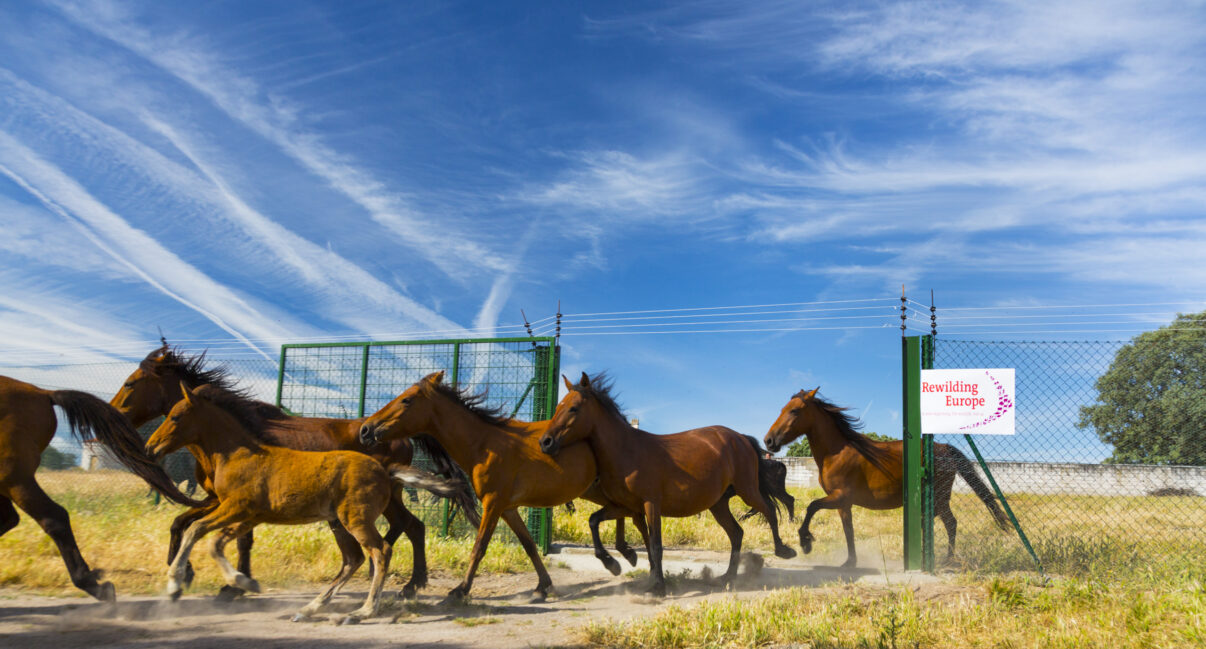
This is where “rewilding-lite” comes in, as a complement or addition to the return of wildlife. Hardy domestic breeds or functional analogues, such as robust cattle and horse breeds, can be used where a wild species is extinct (the aurochs, for instance) or where reintroducing large wild animals poses immediate management challenges. These animals can replicate the ecological functions of the original wild species, from grazing to trampling. They offer a pragmatic solution that fits with local pastoral traditions and helps people and wildlife live side by side.
.
The overall message of the research is clear: rewilding is not a one-size-fits-all solution, but a restoration strategy to be tailored to each case. Success does not come from generic formulas or from leaving the land to itself. It requires rigorous on-the-ground planning, careful control of animal densities and, above all, participatory management that involves farmers, herders, foresters, local communities and land management bodies from the outset.
Commenting on the publication, Mario Cipollone, team leader of Rewilding Apennines, said: “I’d like to thank Marco Davoli, Flavia Strani, Martina Di Benedetto, Stefano Focardi and Andrea Lauta for completing such a demanding piece of work. My contribution focused mainly on the practical side of natural grazing, drawing on my experience of managing the relationship between wildlife and local communities. Our main motivation in writing this paper was to turn to history and science for answers to today’s ecological challenges. We wanted to look for nature-based solutions in a past that we Europeans have filed away and domesticated, like the horses and cattle that once roamed our continent and in which we now struggle to recognise a wild spirit. It is a little like the dog owners who deny that their four-legged friend has kept the hunting instinct of its ancestor, the wolf. The study also considers species regarded as fully wild, such as the Alpine ibex, which we tend to associate with particular geographical areas. Earlier in our own geological epoch, they were distributed at more southerly latitudes. This raises questions about how well large wild or semi-domestic herbivores can actually survive in conditions that are changing so rapidly under a changing climate. Their wider role in the carbon cycle could itself help mitigate those effects.”
Read the full study
